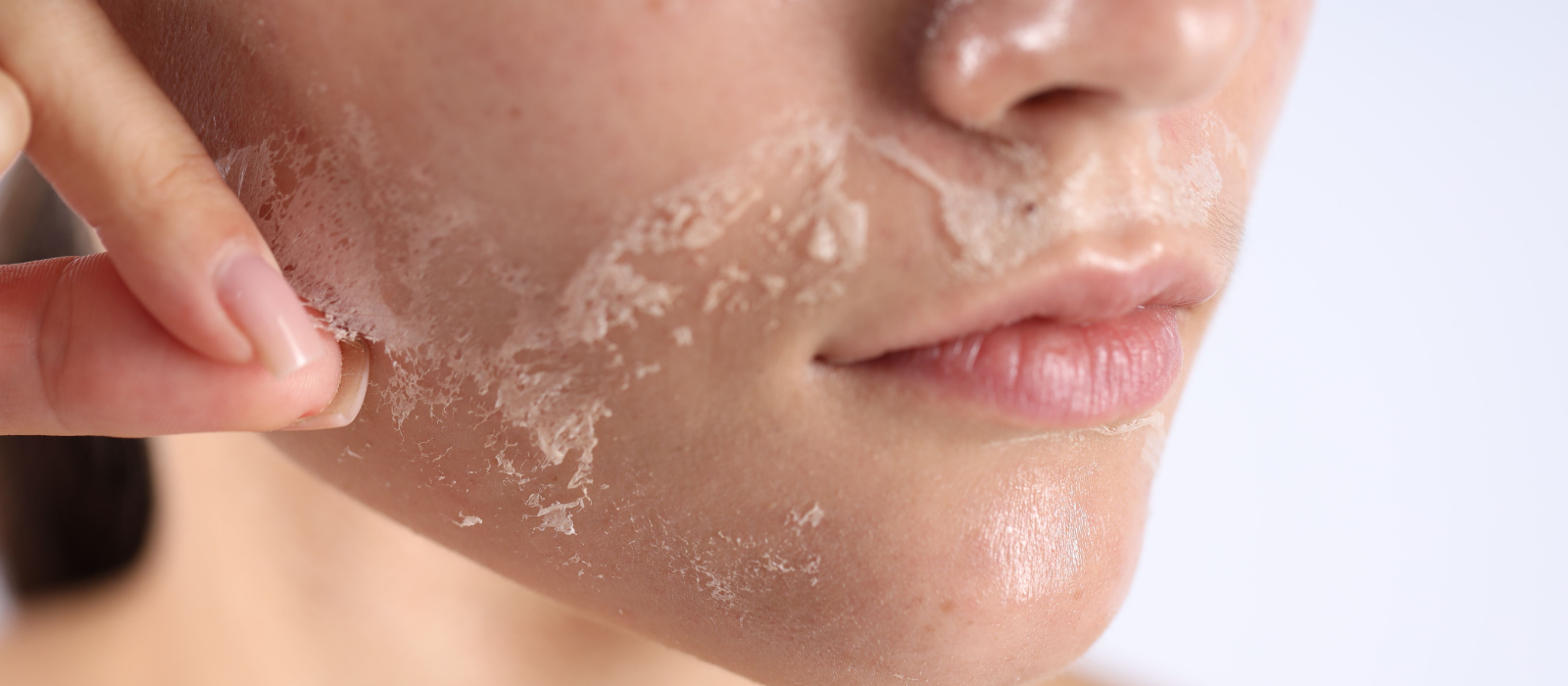
Discover what ceramides are and why your skin needs them. Learn how these lipids strengthen your barrier, prevent moisture loss, and protect against irritation.
Products sting that never used to. Your moisturizer sits on top instead of sinking in, and your skin looks flat by mid-afternoon. It's easy to blame the weather or the new serum, but often the simpler explanation is a stressed skin barrier that's short on the fats holding it together.
Ceramides are a big part of those fats. If your skin cells are tiles, ceramides are part of the grout. When there isn't enough of it, water gets out more easily and irritants get in.
That's why they're worth understanding. When your barrier is in good shape, everything else in your routine tends to sting less and do more of what it's meant to.
What Ceramides Actually Are
Ceramides are waxy lipids that sit between the cells of your skin's outermost layer, the stratum corneum. They share that space with cholesterol and free fatty acids in roughly equal parts, and a 2019 review of topical ceramide research puts them at about 30 to 40% of the lipids there by mass. At least 12 types have been found in human skin.
Your skin makes them itself, but the supply isn't fixed. Harsh cleansing, too much exfoliation, sun and dry air all take a toll, which the next sections cover.
Ceramide changes also show up in skin disease. A 2014 review in the Journal of the American Academy of Dermatology links altered ceramide content to conditions such as atopic dermatitis (eczema), and the 2019 review cites one long-chain ceramide being about half as abundant in eczema-affected skin.
Why Your Skin Barrier Needs Ceramides
The barrier's job is to keep water in and irritants out. Ceramides help by forming part of the tightly packed lipid layers between cells. When those layers thin out, the seal gets leaky.
Water loss goes up first. Dehydrated skin often comes from barrier damage rather than a lack of hydrating products. You can layer hyaluronic acid all day, but if the barrier is leaky, that water doesn't stay long.
Irritants get through more easily too. Harsh cleansers and fragranced products can set off redness on a weakened barrier, and irritated skin is slower to rebuild, so sensitivity tends to snowball.
What Damages Your Natural Ceramide Levels
Over-cleansing is the usual culprit. Sulfate-heavy foaming cleansers, hot water and daily scrubbing all strip lipids from the surface. Any cleanser removes some, and that's normal. Trouble starts when you wash too often or too hard for your skin to keep up.
Over-exfoliation does similar damage by wearing away the outer layer where these lipids sit. Acids like glycolic and physical scrubs both disrupt it when you use them too often.
Your surroundings play a part as well. Sun exposure, low humidity and long hours in heated or air-conditioned rooms all make it harder for skin to hold on to water.
How to Support Your Skin's Ceramide Levels
Topical ceramides can help, though the evidence is more mixed than the marketing. The 2019 review describes trials where ceramide creams improved hydration and cut water loss compared with placebo, and others where a ceramide product made no clear difference. Formulas that pair ceramides with cholesterol and fatty acids copy the mix your skin already uses.
Niacinamide may help your skin make more of its own. This form of vitamin B3 raised ceramide production four- to five-fold in a 2000 study on cultured human skin cells, and applied to dry skin it increased ceramide levels and reduced water loss. It's also usually cheaper than a ceramide serum.
Gentle cleansing protects what you already have. Cream and oil cleansers lift dirt without stripping as much. The American Academy of Dermatology also suggests short, warm (not hot) showers and putting moisturizer on while your skin is still damp.
Your body skin needs ceramides too, especially elbows and knees. A ceramide body lotion can ease the roughness that builds up when barrier function is compromised in these areas.
When Ceramide Products Don't Work
If a ceramide moisturizer isn't making a difference, your barrier may need a longer break. Repairing a badly compromised barrier takes weeks of gentle, consistent care, and pausing strong actives like acids and retinoids for a while usually helps.
Sometimes the problem is the rest of the formula. If a ceramide cream stings or turns you red, switch to one with fewer ingredients and no fragrance. If dryness, cracking or itching doesn't improve, see a dermatologist, because eczema and psoriasis can look like ordinary dry skin.
FAQ
How long does it take for ceramide products to work?
A good moisturizer can make your skin feel more comfortable within days. Rebuilding a damaged barrier takes longer, often several weeks of consistent use alongside gentle cleansing.
Can you use too many ceramide products?
Ceramides themselves rarely irritate, so you don't need to ration them. The other ingredients in each product are the bigger risk, and layering several rich creams can feel heavy or clog pores. One well-made ceramide moisturizer is usually enough.
Do ceramide supplements work for skin?
Oral ceramide supplements have only small studies behind them, and the results are mixed. Topical products and gentle cleansing are the better-tested place to start.
This article is for informational purposes only. It is not a substitute for professional medical advice, diagnosis, or treatment. Always consult a qualified healthcare provider before making changes to your health routine.