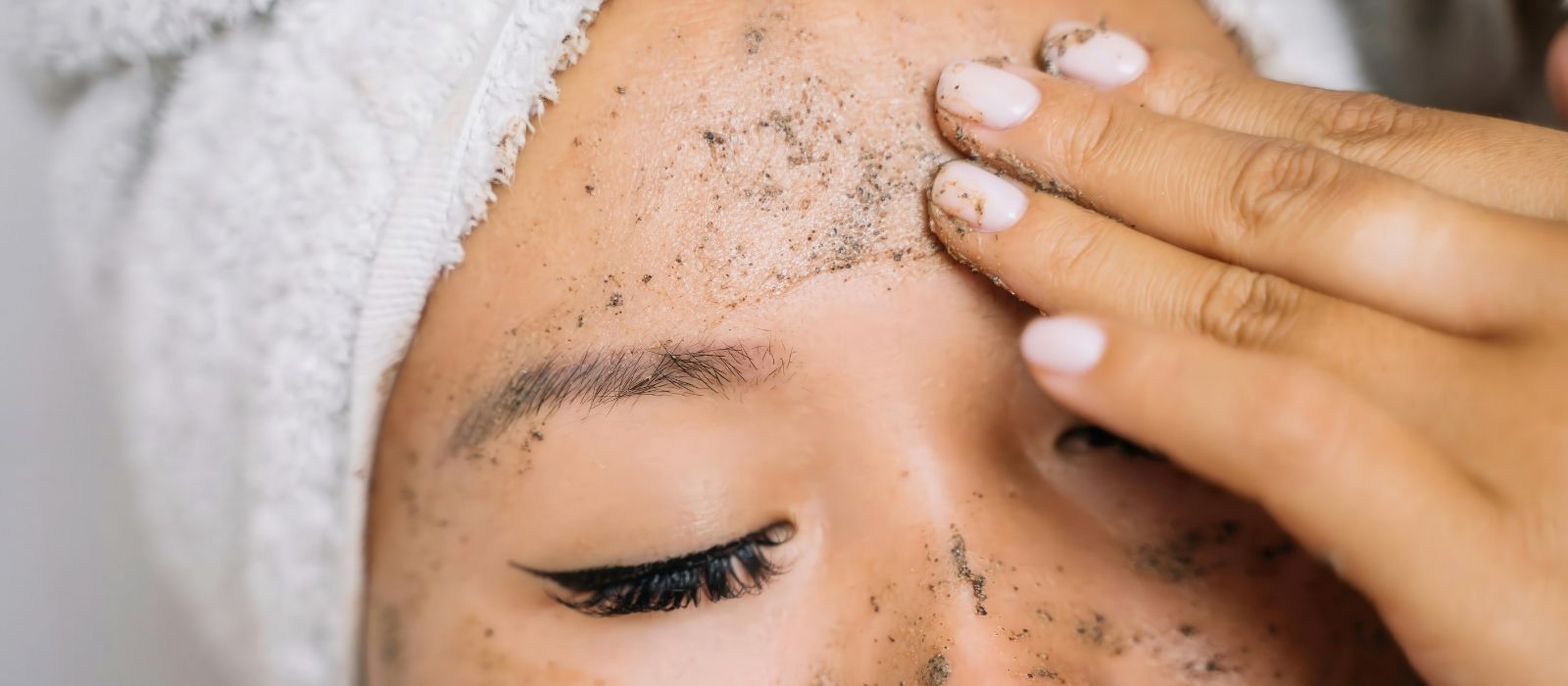
Over-exfoliating damages your skin barrier and causes inflammation, even when your skin looks temporarily smoother. Here's why it happens and how to stop.
Your skin feels baby-smooth after that glycolic acid mask. The texture looks incredible the next morning. So you reach for the salicylic acid cleanser, follow it with your retinol serum, and finish with that grainy scrub you love. Three days later, your face is red, tight, and breaking out worse than before you started.
This is why over exfoliating wrecks your skin, it creates a cycle where temporary smoothness masks long-term damage. Your skin barrier gets weaker with each aggressive treatment, but the immediate results trick you into thinking you're on the right track. The truth is, healthy skin shouldn't need daily exfoliation to look good.
Here's what's actually happening: exfoliation removes dead skin cells from the surface, revealing fresher skin underneath. But your skin produces those cells for a reason, they protect the living cells below from environmental damage, bacteria, and moisture loss. Strip them away too often, and you're exposing vulnerable skin that isn't ready to handle the outside world.
Your Skin Barrier Isn't Optional
Your skin barrier is made of dead skin cells held together by lipids, think of it like a brick wall where the cells are bricks and the lipids are mortar. This barrier keeps irritants out and moisture in. When you over-exfoliate, you're essentially taking a sledgehammer to that wall.
Chemical exfoliants like AHA and BHA acids dissolve the bonds between skin cells. Physical scrubs manually scrape cells away. Retinoids speed up cell turnover, forcing your skin to shed faster than normal. Use more than one of these regularly, and you're attacking your barrier from multiple angles.
The Cleveland Clinic reports that a damaged skin barrier leads to increased trans-epidermal water loss, your skin literally can't hold onto moisture anymore. That's why over-exfoliated skin feels tight and looks dull despite all your efforts to make it glow.
The Inflammation Trap
When your barrier is compromised, your immune system kicks into overdrive. It sees everything, your moisturizer, the air, even water, as a potential threat. This creates chronic low-level inflammation that shows up as redness, sensitivity, and breakouts.
Ironically, this inflammation makes your skin produce more dead cells to try to rebuild the barrier. So you see rough texture and think you need more exfoliation, creating a cycle where you're constantly fighting your skin's natural repair process.
There's research from the Journal of Clinical Medicine showing that compromised skin barriers are linked to increased acne, eczema, and premature aging. The very problems you're trying to solve with aggressive exfoliation get worse when you damage your skin barrier.
Signs You're Over-Exfoliating
Your skin tells you when it's had enough, but the signals aren't always obvious. Tightness after cleansing is the first red flag, healthy skin shouldn't feel like it's shrinking. Increased sensitivity to products that used to work fine is another warning sign.
Breaking out in new places, especially around your jawline and cheeks, often means your barrier is compromised and bacteria are getting in. Different types of acne require different approaches, and over-exfoliation can trigger inflammatory acne even if you normally deal with blackheads.
Shiny skin that looks smooth but feels rough is classic over-exfoliation. You've stripped away the protective layer, leaving the newer cells exposed before they're mature enough to handle it. These cells reflect light differently, creating that artificial-looking shine.
Makeup that won't sit right anymore is another clue. Foundation clings to dry patches or slides off areas that used to hold it perfectly. Your skin's texture has changed at a microscopic level.
How to Fix Over-Exfoliated Skin
Stop all exfoliation immediately. This includes your glycolic acid toner, retinol, scrubs, cleansing brushes, and even washcloths. Your skin needs time to rebuild without interference.
Switch to the gentlest cleanser you can find, cream or oil-based formulas work better than foaming ones right now. Pat your skin dry instead of rubbing. Apply a barrier repair moisturizer while your skin is still damp to lock in hydration.
Look for ingredients that support barrier repair: ceramides, cholesterol, fatty acids, and niacinamide. Avoid anything with fragrance, essential oils, or alcohol. Your skin microbiome is probably disrupted too, so prebiotics and gentle probiotics can help restore balance.
Give it at least 4-6 weeks. Your skin cycle is roughly 28 days, so you need more than one full cycle to see real healing. During this time, your skin might look worse before it gets better as the natural renewal process kicks back in.
When you're ready to reintroduce exfoliation, start with once weekly maximum. Choose one method, either a gentle BHA or a low-concentration AHA, not both. Pay attention to how your skin responds over several days, not just the immediate smoothness.
The goal isn't perfectly smooth skin every day. Healthy skin has natural texture and doesn't need constant intervention to look good. Sensitive skin types especially benefit from less frequent exfoliation and more focus on barrier support.
Frequently Asked Questions
How often should I exfoliate my face?
Most skin types do best with exfoliation 1-2 times per week maximum. Sensitive skin may only need it every 10-14 days. Start less frequently and increase only if your skin handles it without irritation.
Can I use multiple exfoliating products in one routine?
No, using multiple exfoliants together dramatically increases your risk of barrier damage. Choose one method per session and space different types of exfoliation at least 24-48 hours apart.
How long does it take to repair over-exfoliated skin?
Mild over-exfoliation can improve in 2-3 weeks with proper care. Severe damage may take 6-8 weeks or longer to fully heal, depending on how compromised your barrier became.
This article is for informational purposes only. It is not a substitute for professional medical advice, diagnosis, or treatment. Always consult a qualified healthcare provider before making changes to your health routine.