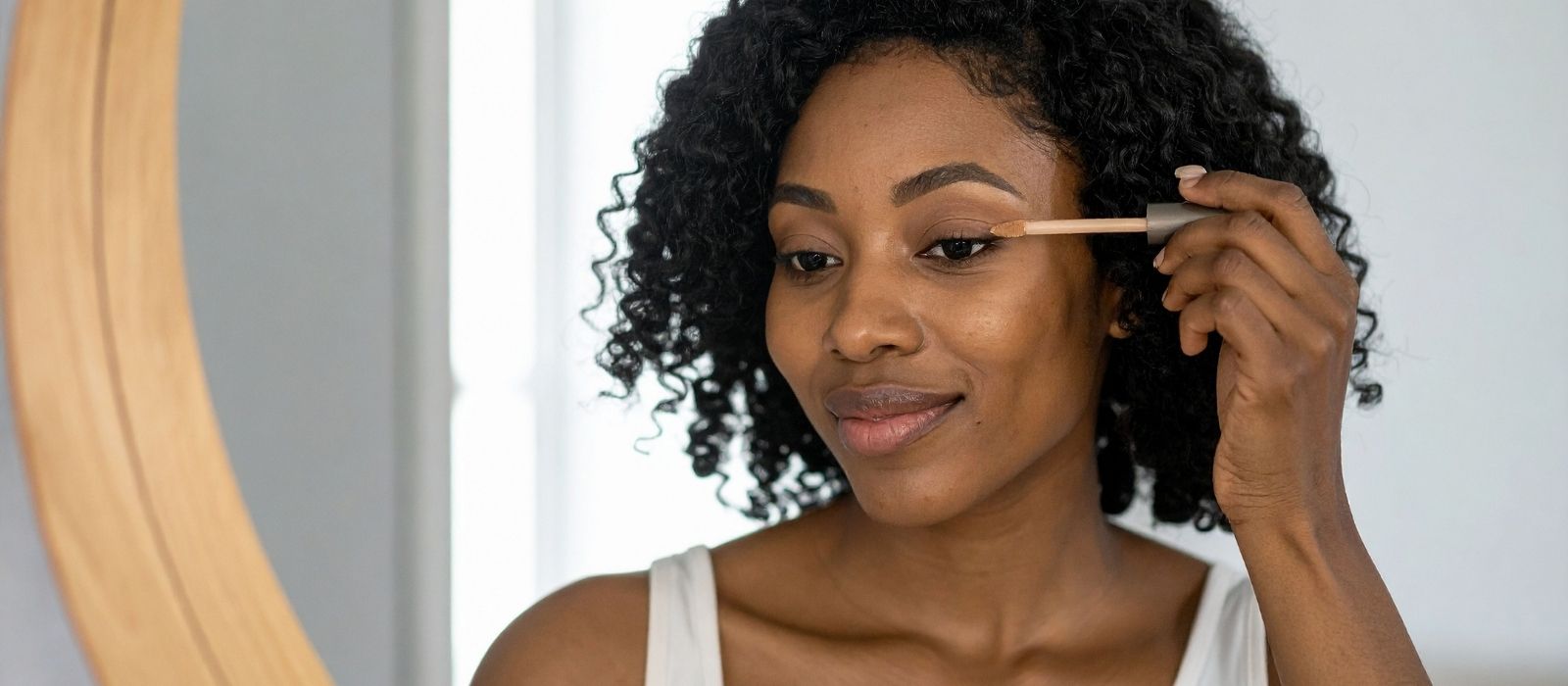
Concealer looks perfect at 8 AM and terrible by noon. Here's why it settles into lines and what actually prevents creasing.
That concealer you carefully patted under your eyes at 8 AM is now sitting in every line you didn't even know you had. By noon, you catch your reflection and wonder if you aged five years or if makeup has turned against you.
Your concealer isn't defective. The problem runs deeper than the product itself, it's about how skin moves, what happens when moisture evaporates, and why the formulas designed to cover also happen to be the ones that migrate into creases.
The real issue is that concealer settling into lines happens in stages throughout the morning, and most people only notice when it's too late to fix.
Why Movement Makes Concealer Migrate
Every time you blink, smile, or squint at your phone, the skin around your eyes contracts and releases. Concealer that seemed smooth at application gets pushed and pulled along with these movements. The delicate under-eye skin has less collagen and oil than the rest of your face, which means it moves more and recovers less.
Most concealers contain waxes and powders that grip onto skin irregularities. When your skin creases, even slightly, these ingredients get trapped in the fold. The concealer that was sitting on top of your skin gets redistributed into places it was never meant to go.
This migration accelerates around 10 AM when your face starts producing natural oils. The oils don't mix with most concealer formulas, they push against them, creating separation that makes the settling more obvious.
The Dryness Problem Nobody Talks About
Concealer creasing gets worse when the skin underneath is dehydrated. Dry skin creates microscopic peaks and valleys that become concealer magnets. Even skin that feels moisturized on the surface can be lacking water deeper down, especially if you're using ingredients that work against each other.
The under-eye area loses moisture 40% faster than other parts of your face. When concealer sits on dehydrated skin, it essentially bakes onto the surface as the day progresses. What started as a smooth application becomes a crusty layer that cracks along natural expression lines.
Most people try to fix this by adding more moisturizer under their concealer, but that creates slip, the concealer slides around instead of staying put. The solution isn't more moisture, it's the right kind of prep and the right formula match.
Why Some Textures Crease More Than Others
Full-coverage concealers contain more pigment and thickening agents, which means they're heavier and more likely to settle. These formulas work beautifully for photography but move throughout the day on real faces with real expressions.
Liquid concealers with a matte finish dry down quickly, creating a film that can't flex with your skin. When that film cracks, it reveals the lines underneath, often making them look more pronounced than they were before you applied anything.
Cream concealers seem like they'd be worse for creasing, but they often perform better because they stay slightly flexible. The problem comes when people apply them too heavily, thinking more coverage means better results.
Color-correcting concealers add another layer of complexity. Orange and pink correctors work well under concealer, but they change how the final layer adheres to your skin. Some combinations create a slippery base that encourages migration.
What Actually Prevents Concealer From Settling
The most effective prevention starts before you open the concealer tube. Pat a small amount of eye cream into the under-eye area, then wait three full minutes. This gives the moisturizer time to absorb instead of creating a slick surface.
Apply concealer in thin layers using a damp beauty sponge, not your fingers. Fingers transfer oils that can break down the formula, and they apply product unevenly. Press the sponge straight down instead of dragging it across the skin.
Set concealer with a light dusting of translucent powder applied with a fluffy brush. Avoid pressed powder compacts and heavy setting powders, they add weight that can pull the concealer into lines. The goal is to lock the concealer in place without creating a cakey layer.
For stubborn creasing, try applying concealer, setting it with powder, then applying a second thin layer of concealer on top. This sandwich method creates multiple thin barriers instead of one thick layer that's more likely to shift.
The color-correcting step works better when you use less product and blend it completely before applying concealer. A sheer wash of orange or pink corrector does more for dark circles than a thick layer, and it won't interfere with how your concealer sits on top.
Frequently Asked Questions
should i use setting spray on my concealer to stop creasing
Setting spray can help, but timing matters. Spray it on a damp beauty sponge and press it over your concealed areas instead of spraying directly onto your face. Direct spraying can reactivate the concealer and cause it to move around. Wait until your powder is fully set before using any spray.
why does my concealer look fine in the mirror but terrible in photos
Different lighting reveals texture that you can't see in your bathroom mirror. Natural light and phone cameras pick up the uneven surface created by concealer settling into lines. The same thing happens with pores, what looks smooth in one light shows texture in another.
can i fix creased concealer without starting over
Lightly tap a damp beauty sponge over the creased areas to lift away the settled product, then reapply a thin layer of concealer just to those spots. Don't try to blend outward, focus on pressing the new product straight down into the cleared area. Set with a small amount of powder if needed.
This article is for informational purposes only. It is not a substitute for professional medical advice, diagnosis, or treatment. Always consult a qualified healthcare provider before making changes to your health routine.