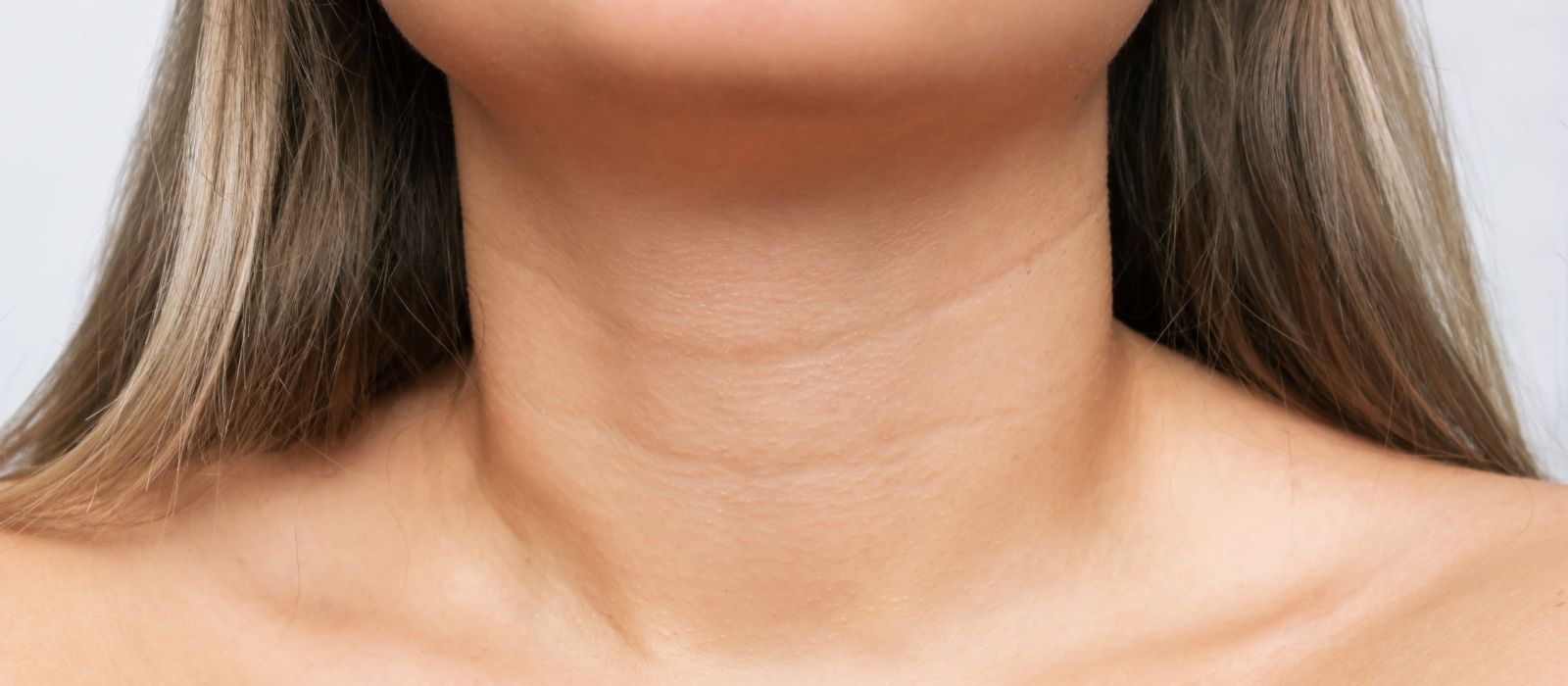
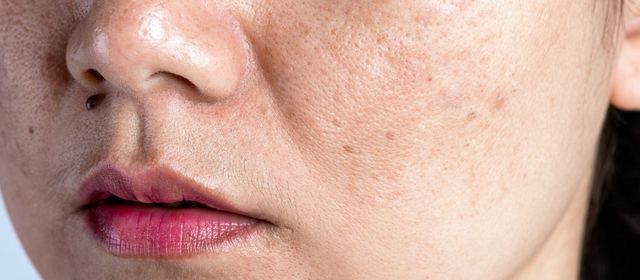
Thin neck skin plus years of sun is the better-supported reason your neck ages faster than your face. And when a darker neck needs a doctor.
Your neck can look older than your face because its thinner skin is chronically exposed to sun. Phone posture gets a lot of attention, but sun is the better-supported cause.
If your face routine is careful and your sunscreen stops at the jaw, the gap between the two can feel unfair. The skin just under your chin can offer a rough clue about which cause is doing the work.
Why Does My Neck Look Older Than My Face?
Two things set the neck apart: thinner skin, and steady sun exposure. Cleveland Clinic dermatologist Dr. Khetarpal says thin skin, like on your neck, is more prone to showing signs of aging and sun damage. The same page calls these areas chronically exposed to sun.
The best-known figure on sun and aging comes from faces, not necks. A study of 298 Caucasian women aged 30 to 78 assessed only facial aging signs. The authors concluded UV exposure seems responsible for 80% of visible facial aging signs. It didn't measure necks, so treat that number as a hint about the neck rather than a measurement of it.
Hormones add to it later on. The American Academy of Dermatology (AAD) says that as estrogen levels fall, skin becomes thinner. It also lists the neck and chest among the places where age spots and larger darker areas appear.
What the Skin Under Your Chin Tells You
Sun damage on the neck can leave a pattern you can check in a mirror. Mottled brown skin threaded with tiny red vessels has a name: poikiloderma of Civatte.
A 2023 cohort study of 28 patients describes it as mottled hyperpigmentation and superficial atrophy with a net of tiny visible blood vessels. It appears on sun-exposed areas of the face, the neck and the V of the chest. The patches spare the parts of the neck that are naturally shaded.
The study doesn't say which areas count as shaded, but the skin right under your chin gets the least direct light. If it looks paler and smoother than the skin a few inches lower, that fits a sun pattern rather than one from folding. It's a rough clue, not a diagnosis.
The study lists UV, menopause hormone changes and reactions to perfumes and cosmetics as suspected causes, and says the full cause isn't understood.
It mainly affects fair-skinned people, especially postmenopausal women, according to the same study. It tends to progress slowly and doesn't reverse, which is why protection matters more than correction here.
Is Tech Neck Real?
Partly, but it's the weakest link in the story. The Cleveland Clinic article says tech neck can lead to horizontal neck lines as well as neck pain and stiffness.
That's a claim in a health article, not a finding from a study, and the research behind it is thin. Sun's role in skin aging is much better studied, though mostly on faces.
Holding your phone nearer eye level costs nothing, so it's fine to try. Just don't expect it to undo lines that are already there, or to protect you the way sunscreen does.
Why Is My Neck Getting Darker?
A darkening neck is not always aging. On a neck with sun damage, darker areas tend to be blotchy and sit where light hits. A different change looks thicker and velvety, and it sits in the folds.
That second one is acanthosis nigricans. The AAD says darker skin in the folds of the neck is common with it. The patch feels velvety and thicker than the skin around it. Mayo Clinic says it often appears in the armpits, groin and back of the neck.
It matters because of what it can point to. Mayo Clinic says most people who have it have become resistant to insulin, and that they are much more likely to develop type 2 diabetes. The AAD lists prediabetes and diabetes among its possible causes and calls AN a possible warning sign of something going on inside the body.
The AAD lists other possible causes too: polycystic ovarian syndrome (PCOS), thyroid disease or an adrenal gland problem. Birth control pills, strong corticosteroids like prednisone and niacin can also trigger it. The AAD says obesity is the most common cause. Higher risk includes excess weight, a family history, and Native American, African, Caribbean or Hispanic descent.
Sun-pattern poikiloderma mainly affects fair skin. So on deeper skin, a neck that is darkening is worth a closer look before you reach for a brightening cream. Dark knees and elbows follow a similar split between friction and insulin.
What Helps an Aging Neck at Home?
Sunscreen, carried below the jaw, does most of the work. The AAD's sunscreen guidance says to remember your neck, face, ears and recommends SPF 30 or higher. Reapply every two hours outdoors, and right after swimming or sweating.
Take it down to the V of your chest too, since that's where the sun pattern above shows up. If a white cast is why you skip it, sunscreen for dark skin covers the formulas that blend in.
For some people a retinoid can help, the AAD says, but the neck needs a gentler start than your face. Dr. Khetarpal advises a lower strength on the neck. The Cleveland Clinic article suggests increasing it only if you get no irritation, burning or redness.
On deeper skin, irritation can leave dark marks that outlast the lines you were treating. Using retinol on dark skin without dark spots goes through the slow build. A separate neck cream isn't required for any of this.
Do Neck Treatments Work, and What Are the Risks?
Some do, for a while, and each has a cost beyond the price. None of them stops the neck from aging afterward.
- Laser resurfacing can lighten or darken treated skin. Mayo Clinic says people with brown or Black skin have a higher risk of long-term skin color changes. Ablative lasers carry a slightly higher risk of scarring, and full recovery takes at least a month.
- Botulinum toxin injections can reduce the look of neck bands, according to Cleveland Clinic. The effect may last 3 to 4 months, depending on the area treated, says Mayo Clinic. Rarely the medicine spreads, so report trouble swallowing, talking or breathing urgently.
- A neck lift removes sagging skin and fat. Cleveland Clinic lists bleeding, bruising, infection and poor wound healing among its risks. Results can last years, but surgery doesn't prevent later aging.
Mayo Clinic says health care providers don't recommend Botox in pregnancy or while breastfeeding. For lasers on brown or Black skin, choose someone experienced with a range of skin colors and ask how many necks like yours they've treated.
The age you are changes which of these is even on the table. Skin in your 30s and 40s explains why sun outweighs birthdays early on. Your skin in your 50s covers what to get checked later.
When to See a Doctor About Neck Skin
See a dermatologist or your primary care doctor if any of these apply:
- A dark, thick, velvety patch in the folds of your neck. Ask whether you need a blood test for prediabetes or diabetes.
- That kind of patch appears suddenly or spreads fast. See a dermatologist promptly. The AAD says AN that develops quickly can be a sign of cancer, especially of the stomach, colon or liver. Mayo Clinic notes this is rare.
- A spot on your neck or chest that is new, changing, bleeding or unlike the others.
- Any "age spot" you plan to treat. The AAD advises a skin exam first, because skin cancer can look like an age spot.
Mayo Clinic's advice is to see a provider for skin changes, especially sudden ones. Bring a list of your medicines, including niacin and steroids.
Frequently Asked Questions
At What Age Do Neck Wrinkles Start?
There is no set age, because sun exposure adds up over years. Thinner skin after menopause adds to it. Protecting your neck now matters more than the year you start.
Can Neck Wrinkles Be Reversed?
Not fully. A retinoid may soften lines over time, and procedures can help temporarily. Sun-pattern discoloration such as poikiloderma of Civatte tends to be slow and irreversible, so protection is the main tool.
Is a Dark Neck a Sign of Diabetes?
It can be. A dark, velvety, thick patch in the neck folds may be acanthosis nigricans, which is linked to insulin resistance and prediabetes. See a doctor to get checked.
This article is for informational purposes only. It is not a substitute for professional medical advice, diagnosis, or treatment. Always consult a qualified healthcare provider before making changes to your health routine.