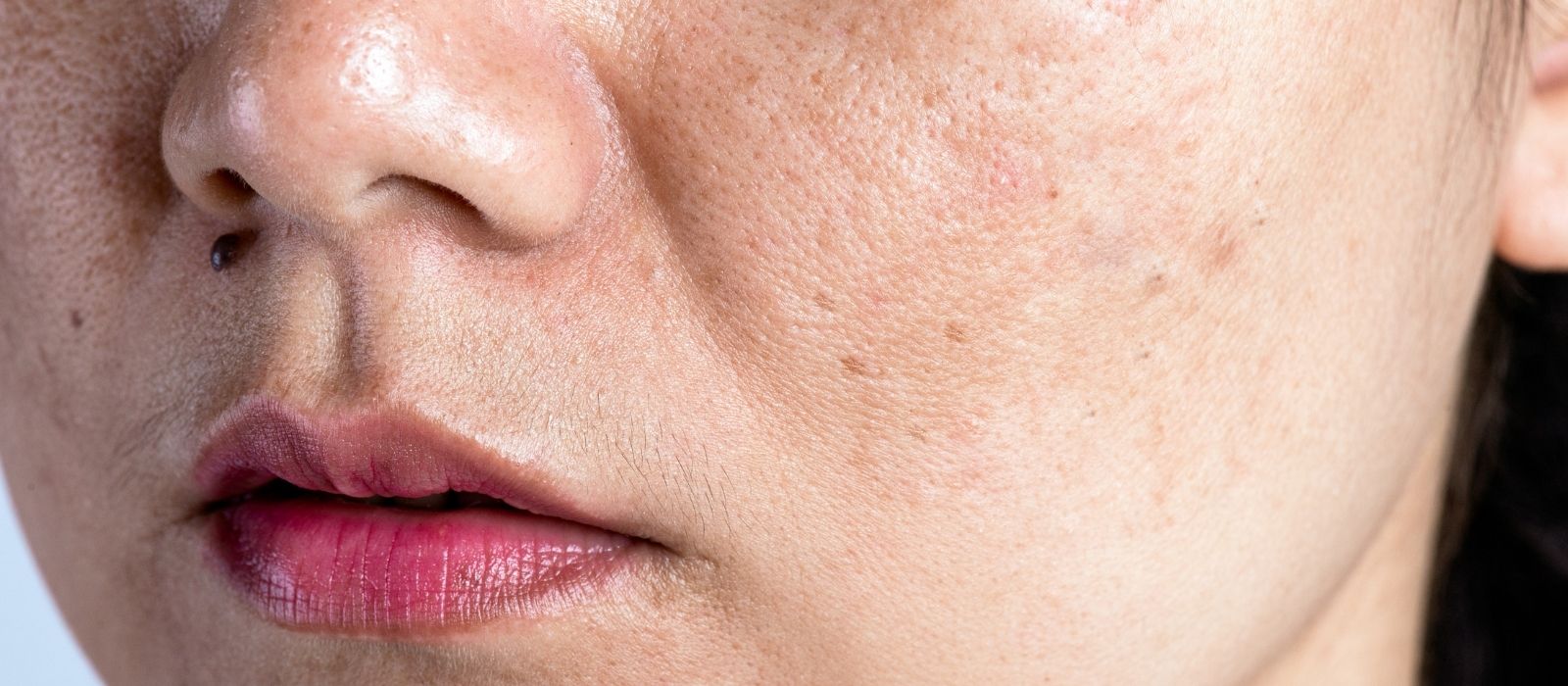
Inflammation doesn't just cause breakouts. Over time it changes your skin's texture, tone, and how fast it ages.
You sleep better. You switch to gentle skincare and cut back on sugar. Yet your skin still looks tired, uneven and older than you feel.
One explanation dermatologists are paying more attention to is chronic, low-grade inflammation. Unlike the red, hot inflammation of a spot or a cut, it's quiet, and you don't see it from day to day.
The age-related version has a name: inflammaging, a slow rise in inflammatory signals as we get older. Much of the evidence so far shows associations rather than cause and effect, but it fits with what's known about how skin breaks down over time.
How Chronic Inflammation Shows Up in Your Skin Over Time
Collagen and elastin give skin its firmness and bounce. Enzymes called matrix metalloproteinases (MMPs) break them down, and in healthy skin that breakdown is balanced by repair.
The best-studied trigger is the sun. A 2016 review describes how UV light switches on inflammatory signaling in skin cells, which raises MMP levels and breaks down collagen. Inflammation from other sources is thought to push the same way, which is why the changes build slowly instead of appearing all at once.
Texture often changes first. Skin feels rougher and looks less even as cell turnover slows with age.
Uneven tone follows. Inflammation can leave dark patches, known as post-inflammatory hyperpigmentation, which are more likely and last longer on darker skin. Daily sunscreen still matters most, because sun is the main driver of age spots.
How Stress Feeds Skin Inflammation
When you're under stress for weeks or months, your stress hormones stay higher than they should, and your skin feels it.
A 2019 review of 21 studies found that psychological stress reduces the fats and proteins your skin uses to build its barrier, leaving it drier and leakier. Irritants then get in more easily, irritation means inflammation, and inflamed skin is harder to settle.
The barrier is the outermost layer of skin, the part that keeps moisture in and irritants out. When it's damaged, you get the kind of dryness no moisturizer seems to fix.
What Actually Reduces Skin Inflammation Long-Term
Anti-inflammatory skincare helps, but it can't do much about inflammation driven by how you sleep, eat or handle stress. Those are worth looking at too.
Diet matters, but the evidence is narrower than many claims suggest. In a 10-week trial of 45 people with mild to moderate acne, spots dropped significantly in the group taking omega-3 supplements (a borage oil group improved too), while a third group took nothing. Oily fish and flaxseed are food sources. For sugar, small studies suggest a low-glycemic diet may reduce acne, though not every study agrees.
Sleep shows up in your skin. A study of 60 women found that poor sleepers had more signs of intrinsic skin aging, the kind not caused by sun, than good sleepers, and their barrier recovered more slowly after damage. It compared two groups rather than testing a change, so it shows a link, not proof.
Topical ingredients can help alongside these changes. Niacinamide and azelaic acid both calm redness and inflammation and are usually well tolerated.
Why Some People Age Faster Despite Good Habits
Genes affect how your skin ages, and you can't change them. Two people with the same habits can look quite different at 50.
Your surroundings count too. Sun exposure is the biggest factor, and air pollution is also linked to skin aging.
Some sources of inflammation are easy to miss. Ongoing skin conditions such as acne, eczema or rosacea keep skin inflamed, and so can long-running stress responses that feel normal because they've lasted so long.
What makes sense is fewer triggers and better repair: managing stress, sleeping enough, getting skin conditions treated, and using skincare that doesn't irritate your barrier.
Expect changes over months, not days. That's slower than any new serum promises, but it's the part that affects how your skin ages.
FAQ
How long does it take to see skin improvements after reducing inflammation?
It depends on what you change. Irritated skin can calm within weeks of dropping harsh products, and in one trial omega-3 supplements reduced acne over 10 weeks. Changes in firmness take much longer, and there's no reliable timeline for them.
Can you reverse skin damage from chronic inflammation?
Partly. Some damage, like lost collagen, can't be fully undone, but you can slow further breakdown. Daily sunscreen protects what you have, and treatments such as retinoids can improve texture over months.
What foods cause the most skin inflammation?
The evidence is strongest for acne. Small studies link high-glycemic foods, like white bread and sugary drinks, and cow's milk to more breakouts, though not everyone reacts the same way. If you suspect a food, cut it out for a few weeks and see whether your skin changes.
This article is for informational purposes only. It is not a substitute for professional medical advice, diagnosis, or treatment. Always consult a qualified healthcare provider before making changes to your health routine.