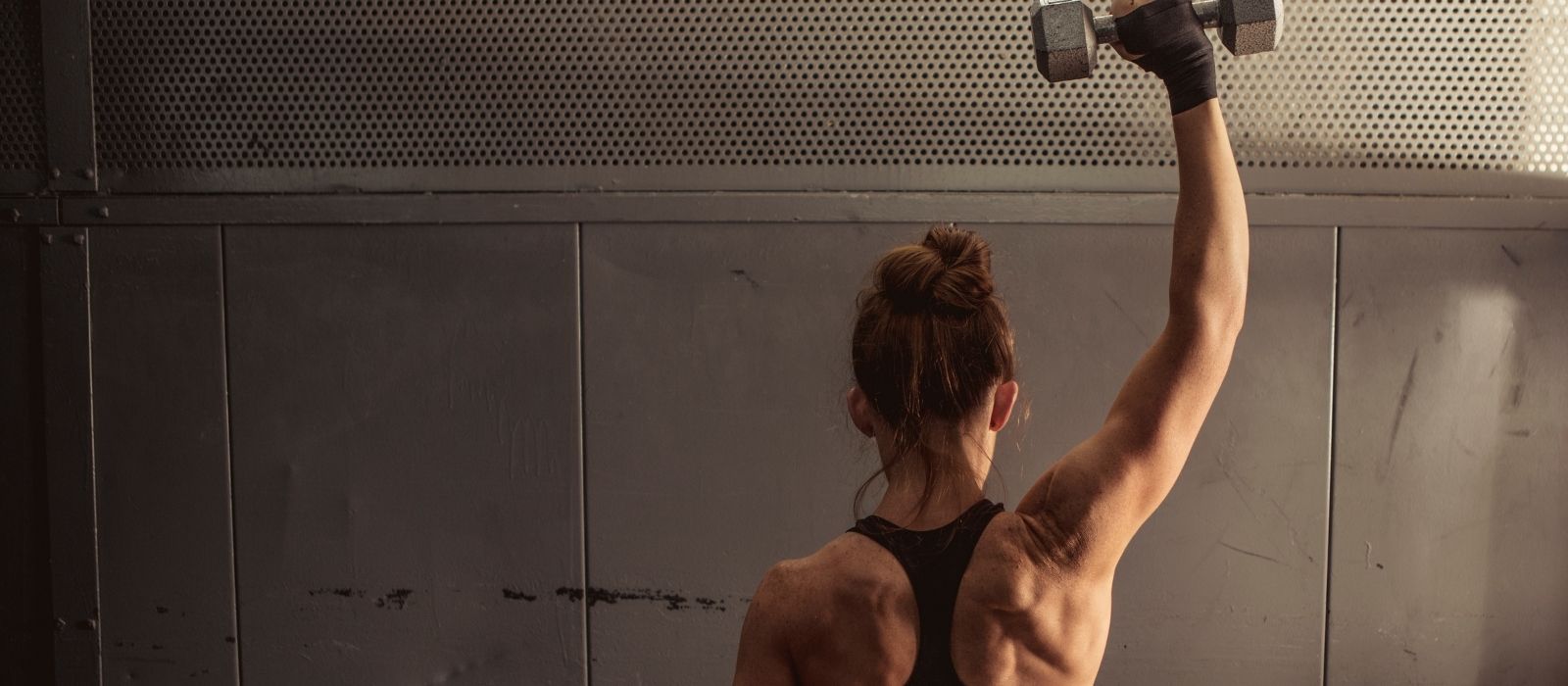
Most women plateau in the gym because they're not systematically progressing. Here's what progressive overload actually means and how to apply it.
You've been doing the same workout for six months. Same weights, same reps, same routine. You wonder why your squat isn't getting stronger and why those 15-pound dumbbells still feel challenging when they used to be your warm-up weight.
The problem isn't your genetics or your protein intake. It's that you're asking your muscles to do the exact same thing week after week, expecting different results. Your body adapted to that challenge months ago.
Progressive overload for women means systematically increasing the demands on your muscles over time. Without it, you hit a plateau where your body maintains its current strength but stops building new muscle or getting stronger. Most women skip this principle entirely, which is why they spend years lifting the same weights with no visible progress.
What Progressive Overload Actually Means
Progressive overload doesn't just mean adding more weight to the bar. It's any increase in training stimulus that forces your muscles to work harder than they did before. Your muscles adapt to whatever you consistently ask them to do. Give them the same challenge repeatedly, and they'll maintain their current capacity without growing stronger.
There are five ways to progressively overload your muscles. Adding weight is the most obvious, but it's not always practical or safe. You can increase reps with the same weight — if you did 8 squats with 95 pounds last week, aim for 9 or 10 this week. You can add sets — turn your 3 sets of squats into 4 sets. You can slow down the movement to increase time under tension. Or you can decrease rest periods between sets.
The key is tracking what you did last time and beating it somehow this time. Even small increases count. Going from 12 reps to 13 reps with the same weight creates enough stimulus to trigger adaptation.
Why Women Plateau Without Progressive Overload
Women tend to underestimate their strength capacity. There's a study from the University of Dayton that found women typically select weights 20% lighter than what they could actually handle for their target rep ranges. This conservative approach leads to months of lifting the same weights without progression.
Your muscles need a reason to grow stronger. If you can complete 12 reps easily with 20-pound dumbbells, your body has no reason to build more muscle or increase strength. It's already strong enough to handle the demand you're placing on it.
Fear of lifting heavier keeps many women stuck. But strength training benefits women far beyond aesthetics, and progressive challenge is what unlocks those benefits. Your muscles won't accidentally get bulky from adding 2.5 pounds to your deadlift.
How to Apply Progressive Overload
Start by writing down what you did. Track weight, reps, and sets for each exercise. Your phone's notes app works fine. If you squatted 85 pounds for 3 sets of 8 reps last week, you need to beat that somehow this week.
Increase weight by the smallest increment your gym allows — usually 2.5 pounds for lower body exercises and 1.25 pounds for upper body. If that's too much, add reps first. Master 3 sets of 12 with your current weight before jumping up.
When you can't add weight or reps, manipulate other variables. Take 10 seconds to lower the weight instead of 3 seconds. Add a fourth set. Rest 90 seconds between sets instead of 2 minutes. Each change forces adaptation.
Plan your progression weekly. If you're new to strength training, you might progress every session. More experienced lifters might add weight every two weeks or focus on rep increases for several weeks before jumping weight.
What Progressive Overload Looks Like in Practice
Week 1: Bench press 65 pounds for 3 sets of 8 reps
Week 2: Bench press 65 pounds for 3 sets of 10 reps
Week 3: Bench press 67.5 pounds for 3 sets of 8 reps
Week 4: Bench press 67.5 pounds for 3 sets of 10 reps
This pattern ensures consistent challenge without overwhelming your muscles. Your strength builds systematically instead of randomly.
Progressive overload works because it matches how your body actually adapts. Building muscle as a woman requires consistent challenge that slightly exceeds your current capacity. Without progression, you're just maintaining what you already have.
FAQ
How often should I increase weight for progressive overload
Beginners can often add weight every 1-2 weeks. More experienced lifters might progress every 3-4 weeks or focus on rep increases between weight jumps. Track your performance and increase when you can complete all sets with 1-2 reps in reserve.
What if I can't add more weight to an exercise
Add reps, add sets, slow down the movement, or decrease rest periods. You can also try harder exercise variations — regular push-ups instead of incline push-ups, or single-leg squats instead of regular squats.
Is progressive overload different for women vs men
The principle is identical, but women often need to start with smaller weight increments and may progress more slowly in upper body exercises. Hormonal differences affect recovery and strength gains, but progressive overload remains essential for both sexes.