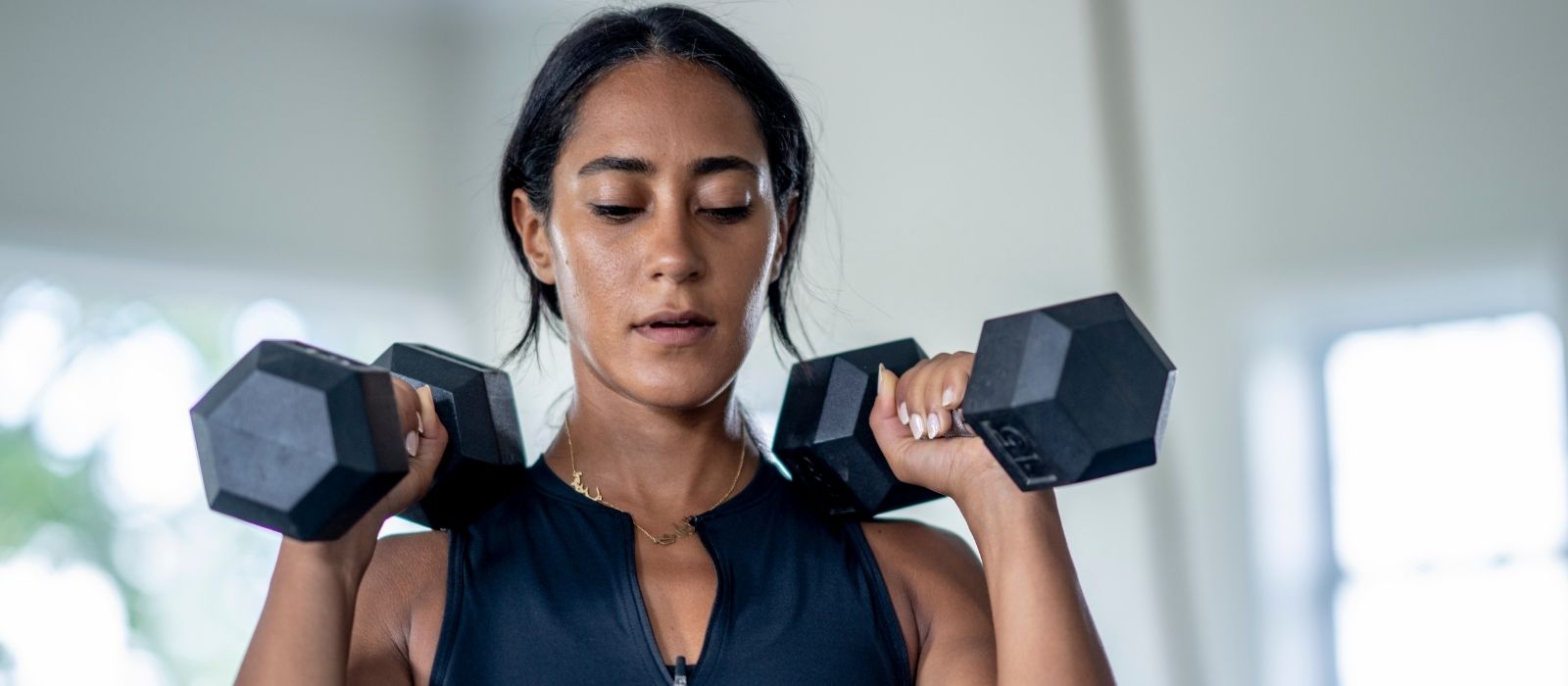
The real case for strength training has nothing to do with how you look. Here's what lifting weights actually does for women's bone density, hormones, and longevity.
You skip the weights and head straight for the treadmill. Maybe grab some five-pound dumbbells for arm circles. The reasoning makes perfect sense — cardio burns calories, weights make you bulky, and besides, you're not trying to look like a bodybuilder.
That entire framework misses the point. The case for why women should lift weights has nothing to do with appearance. It's about what happens inside your body when you challenge your muscles with progressive resistance — changes that affect everything from your bone density to how well you age.
Women lose bone mass faster than men starting around age 30. We face unique hormonal shifts during perimenopause and menopause that affect metabolism, muscle mass, and insulin sensitivity. Light cardio and yoga classes don't address any of these issues. Strength training does.
Your Bones Need Load to Stay Strong
Bone tissue responds to mechanical stress the same way muscle does — use it or lose it. When you lift weights, the stress signals your bones to deposit more calcium and strengthen their internal structure. This process, called bone remodeling, slows dramatically without regular resistance training.
Women lose about 1% of bone density per year after age 30, but the rate accelerates to 3-5% annually during menopause when estrogen drops. A study from the University of Arizona found that postmenopausal women who did strength training twice weekly for a year increased their spine bone density by 1.6%, while the control group lost 3.6%.
Walking doesn't create enough impact. Yoga helps with balance but doesn't load bones sufficiently. You need to lift weights heavy enough that your last few reps feel challenging. That's what triggers the bone-building response.
Strength Training Fixes Metabolic Problems Before They Start
Muscle tissue burns more calories at rest than fat tissue. Every pound of muscle burns roughly 6-7 calories per day just existing, compared to 2-3 calories for fat. This matters more as you age because you naturally lose 3-8% of your muscle mass per decade after 30.
That muscle loss doesn't just slow your metabolism — it makes you more prone to insulin resistance. When you have less muscle mass, your body can't store glucose as effectively, so blood sugar stays elevated longer after meals. Strength training reverses this by building the tissue that acts as your body's glucose storage system.
Research from Harvard shows that women who do strength training and hormones work together to improve insulin sensitivity within weeks. Your muscles become more efficient at pulling sugar from your bloodstream, which reduces your risk of type 2 diabetes and makes weight management easier long-term.
Hormonal Health Depends on Muscle Mass
Estrogen production doesn't just happen in your ovaries. Fat tissue also produces estrogen, but muscle tissue helps regulate how that estrogen gets used. When you don't have enough muscle mass, you're more likely to experience estrogen dominance — too much estrogen relative to progesterone.
This imbalance shows up as irregular periods, mood swings, weight gain around your midsection, and increased PMS symptoms. Strength training helps by improving your body's ability to metabolize and clear excess hormones through your liver.
The stress-response benefits matter too. Lifting weights trains your nervous system to handle acute stress better, which can reduce cortisol levels throughout the day. Chronic cardio often does the opposite — it keeps cortisol elevated and can worsen hormonal imbalances.
Why Starting Matters More Than Perfection
You don't need to deadlift your body weight or spend two hours in the gym. How to start strength training can be as simple as bodyweight squats, push-ups against a wall, and holding planks. The key is progressive overload — gradually increasing the challenge over time.
Most women worry about getting too muscular, but building significant muscle mass requires years of consistent training, specific nutrition, and often genetic advantages. What you'll actually notice first is better posture, more energy, and tasks like carrying groceries or lifting your kids becoming easier.
The bone density and metabolic benefits start within weeks. Your insurance policy against osteoporosis, diabetes, and age-related muscle loss begins the first time you pick up weights heavy enough to challenge your current strength level.
Walking for fitness has its place, but it can't replace resistance training for long-term health. Neither can cardio classes or light yoga. Your bones, muscles, and hormones need the specific stimulus that only comes from progressively challenging your strength.
FAQ
Will lifting weights make me look bulky?
No. Women have much lower testosterone levels than men, making significant muscle growth difficult without years of specific training and nutrition. Most women notice improved body composition and strength without dramatic size increases.
How often do I need to lift weights to see health benefits?
Two sessions per week targeting all major muscle groups provides most health benefits. The CDC recommends strength training at least twice weekly for optimal bone density and metabolic health.
Can I get the same benefits from resistance bands or bodyweight exercises?
These can be effective starting points, but you'll eventually need heavier resistance to continue seeing bone density and strength improvements. Free weights or machines allow for better progressive overload over time.
This article is for informational purposes only. It is not a substitute for professional medical advice, diagnosis, or treatment. Always consult a qualified healthcare provider before making changes to your health routine.