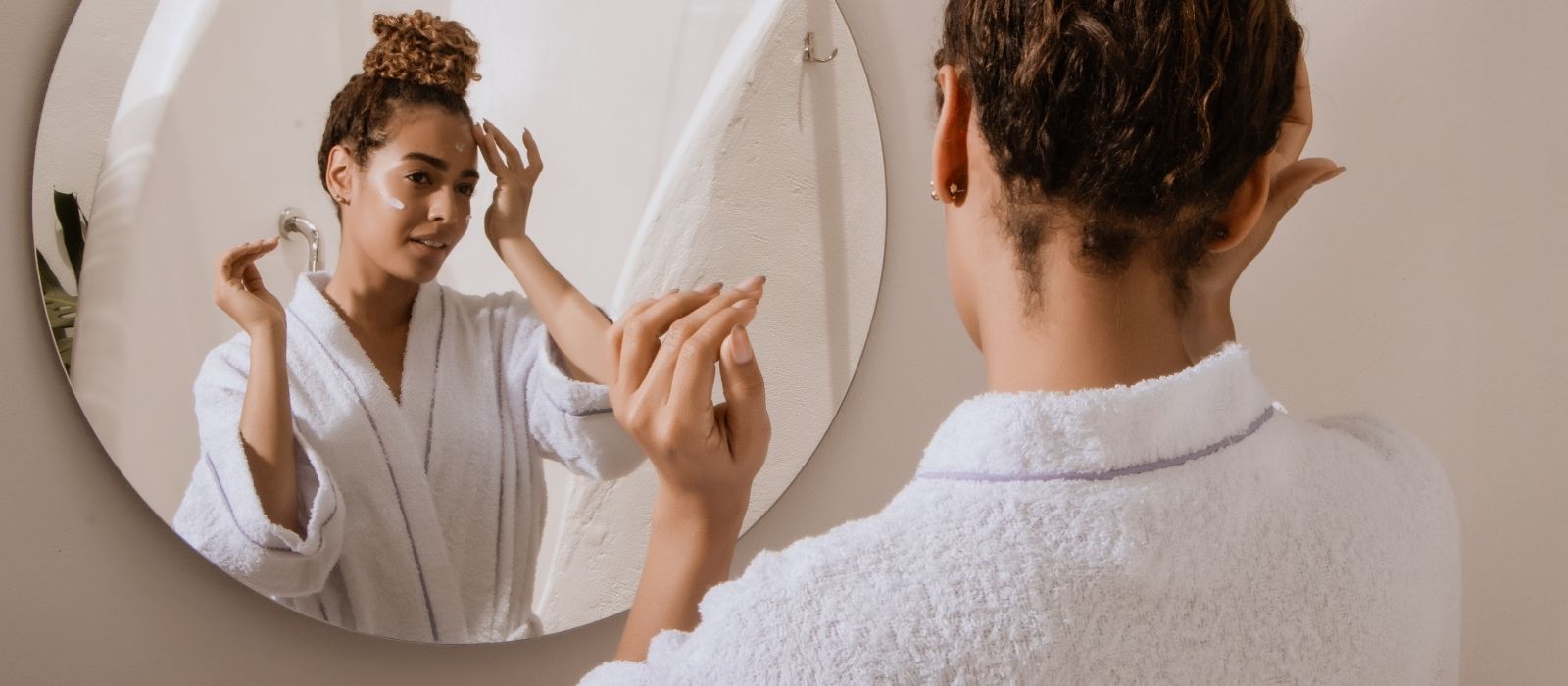
Your pores aren't actually getting larger. Here's the science behind why they look bigger up close and what actually shrinks their appearance.
You stand three inches from the bathroom mirror analyzing every pore, cataloging which ones got bigger overnight. Then you take a selfie from the same distance and your skin looks completely different — smoother, more even, almost poreless in comparison.
You're not imagining the difference. Your pores aren't actually changing size throughout the day. The problem is that mirrors and cameras capture light completely differently, and your eyes process that information in ways that make identical skin look dramatically different depending on how you're viewing it.
Distance changes everything about pore visibility. At mirror distance — usually 12 to 18 inches — you're seeing shadows that don't exist in photos. Pores are tiny depressions in your skin. When light hits them from above (like bathroom lighting), it creates miniature shadows inside each opening. Your brain interprets these shadows as larger, darker holes.
Why Mirror Distance Makes Pores Look Huge
Bathroom mirrors position you at the worst possible distance for accurate pore assessment. You're close enough to see individual pore openings but far enough that your eyes can't properly judge their actual depth. This creates an optical illusion where shallow depressions look like craters.
Phone cameras work differently. The lens sits flush against a piece of glass, and the flash (even when you don't notice it firing) fills pores with light instead of creating shadows. Software processing smooths micro-textures automatically. What you see in that front-facing camera isn't more accurate — it's just processed differently.
Overhead lighting makes everything worse. Most bathroom lights sit directly above the mirror, casting shadows straight down into every pore. That's why your skin looks completely different in natural side lighting or when you hold a phone flashlight at face level. The shadows disappear because light is hitting your skin from angles that fill the depressions instead of emphasizing them.
Your Skin Texture Hasn't Changed
Pore size is determined by genetics, oil production, and age-related collagen loss. None of these factors fluctuate hour by hour. If your pores look dramatically different between morning and evening mirror checks, you're seeing lighting and angle changes, not skin changes.
Oil production does affect pore appearance throughout the day, but not size. When sebaceous glands produce oil, it can make pores look more prominent because there's more contrast between the opening and surrounding skin. This is especially noticeable on areas with facial redness, where inflammation makes the contrast even sharper.
What Actually Minimizes Pore Appearance
Retinoids work because they increase cell turnover around pore openings. Dead skin cells accumulate at the rim of each pore, making the opening look larger and more defined. Tretinoin or retinol helps cells shed more efficiently, so there's less buildup creating that dark ring effect.
Niacinamide reduces oil production, which means less contrast between the pore and surrounding skin. A study from the International Journal of Cosmetic Science found that 5% niacinamide reduced sebum production by 39% after 12 weeks. Less oil equals less visible pore definition.
Salicylic acid dissolves the plugs inside pores — the mixture of oil, dead skin, and debris that stretches the opening. When you remove that plug, the pore contracts slightly. It's not shrinking permanently, but it's not being held open by accumulated material.
Chemical exfoliation works better than physical scrubs because acids dissolve the connections between dead skin cells instead of just pushing them around. Physical scrubs can actually make pore appearance worse by creating micro-tears that reflect light differently, making skin texture look more uneven.
Why Professional Photos Hide Pores Completely
Professional photographers use ring lights or softboxes positioned to eliminate shadows. The light comes from multiple angles simultaneously, filling every depression on your face. Plus, professional cameras capture so much detail that slight softening in post-processing isn't noticeable — unlike phone cameras that over-smooth and create that artificial look.
Ring lighting is why influencer skincare photos look impossibly smooth. The circular light source surrounds the camera lens, casting light directly into pores instead of over them. You can recreate this effect with a small ring light positioned around your phone camera.
The mirror isn't lying, but it's not telling the complete truth either. Your skin texture exists somewhere between the crater-face you see up close in bathroom lighting and the poreless perfection of heavily processed selfies. Understanding why these differences exist helps you focus on what actually improves skin texture instead of chasing an appearance that only exists under specific lighting conditions.
If your skin consistently looks different than it used to, that might signal changes worth addressing. Persistent dullness or changes in how your skin responds to products could indicate that your barrier needs attention or that you're experiencing product purging from new actives.
FAQ
Do pores actually get bigger with age?
Yes, but slowly. Collagen breakdown over decades means less structural support around pore openings, so they can appear larger. Sun damage accelerates this process by breaking down collagen faster.
Why do my pores look bigger after washing my face?
Water temporarily plumps the skin around pores while the opening itself stays the same size, creating more contrast. This effect fades within 10-15 minutes as your skin returns to normal hydration levels.
Can you permanently shrink pores?
No. Pore size is determined by your sebaceous gland size, which is genetic. You can minimize their appearance with consistent care, but the actual opening size won't change permanently without professional treatments like laser resurfacing.
This article is for informational purposes only. It is not a substitute for professional medical advice, diagnosis, or treatment. Always consult a qualified healthcare provider before making changes to your health routine.