Learn why your skin changes during your menstrual cycle, from hormonal acne to dryness. Get the week-by-week breakdown of what's happening and why.
One week you're glowing. The next week, your chin erupts in angry bumps that weren't there yesterday. Your skin feels like it's operating on its own timeline, and you can't figure out the pattern.
Your menstrual cycle is running the show. Every week brings different hormone levels, and your skin responds to each shift like it's getting new instructions. What feels random actually follows a predictable 28-day pattern that most people never connect to their breakouts.
Here's what's actually happening: estrogen and progesterone don't just control your period, they regulate oil production, collagen synthesis, and how your skin retains water. When these hormones spike and crash throughout your cycle, your skin changes too. Understanding this pattern means you can stop fighting your skin and start working with it instead.
The Four Phases of Your Cycle and What They Do to Your Skin
Your menstrual cycle has four distinct phases, each with different hormone levels that create specific skin changes. Most people only pay attention to their period week, but the other three weeks are just as important for your complexion.
During menstruation (days 1-7), both estrogen and progesterone are at their lowest. This hormonal crash triggers inflammation throughout your body, including your skin. You'll notice more sensitivity, possible flare-ups of existing conditions, and that overall dull look that makes you want to hide under makeup.
The follicular phase (days 1-13) overlaps with menstruation but extends beyond it. Estrogen starts climbing, which boosts collagen production and helps your skin retain moisture. This is when you start seeing that post-period glow, your skin gets plumper, smoother, and more resilient.
Ovulation (around day 14) brings peak estrogen levels. Your skin looks its absolute best during this phase. Collagen production is maxed out, oil production is balanced, and you're getting that natural radiance that no highlighter can replicate. This is your skin's golden week.
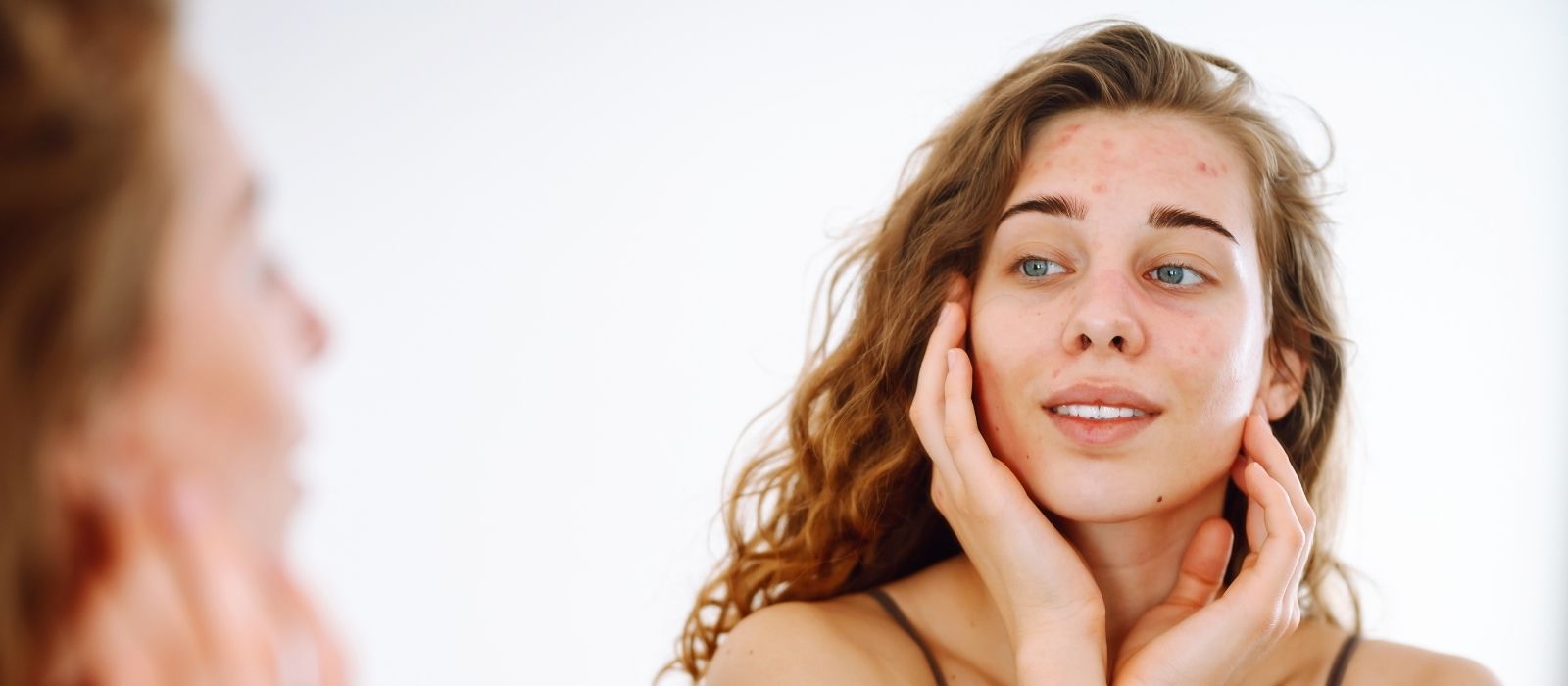
The luteal phase (days 15-28) is where things get complicated. Progesterone surges while estrogen drops, and this hormone shift triggers increased oil production, especially around your jawline and chin. This is when hormonal acne typically appears, usually 7-10 days before your period starts.
Why Progesterone Causes Breakouts
Progesterone gets blamed for period acne, but it's not inherently bad for your skin. The problem is what progesterone does when it spikes during your luteal phase, it stimulates your sebaceous glands to produce more oil, particularly around your lower face where these glands are most concentrated.
This extra oil wouldn't be a problem if your pores could handle it. But progesterone also makes your skin cells stick together more, which can clog pores right when oil production increases. That combination creates the perfect environment for different types of acne to develop.
The location matters too. Hormonal breakouts typically show up along your jawline, chin, and sometimes your neck, areas with the highest concentration of hormone-sensitive oil glands. If you're getting forehead or nose breakouts, those are more likely related to other factors like stress or products.
Water Retention and Skin Texture Changes
Progesterone also affects how your skin holds water. During your luteal phase, you might notice your skin looks puffier or feels tighter, especially around your eyes and cheeks. This isn't just bloating, your skin is actually retaining more water due to hormonal changes.
Some people love this plumping effect because it temporarily smooths fine lines. Others find it makes their skin feel uncomfortable or changes how their makeup sits. The water retention usually peaks 2-3 days before your period starts, then drops quickly once menstruation begins.
Estrogen's Protective Effects
Estrogen is your skin's best friend. It stimulates collagen and elastin production, helps your skin barrier function properly, and keeps oil production balanced. When estrogen levels are high during your follicular phase and ovulation, your skin can handle more active ingredients and bounces back from damage faster.
This is why many people can use stronger treatments like retinoids or acids during the first half of their cycle without irritation, but the same products cause problems during their luteal phase. Your skin's tolerance changes with your hormones.
The research backs this up. A study from the Journal of Women's Health found that skin barrier function is significantly stronger during high-estrogen phases compared to low-estrogen phases, which explains why you're more prone to sensitivity and irritation right before and during your period.
How to Work With Your Cycle Instead of Against It
Once you understand your pattern, you can adjust your routine to match what your skin needs each week instead of using the same products year-round and wondering why they sometimes don't work.
FAQ
Why does my skin get oily before my period but dry during it?
Progesterone increases oil production in the week before your period, but once your period starts and progesterone crashes, oil production drops while inflammation increases, making your skin feel dry and sensitive.
Can birth control stop period-related skin changes?
Hormonal birth control can reduce cyclical skin changes by keeping hormone levels more stable, but it doesn't eliminate them completely. Some people see improvement in hormonal acne, while others experience different skin issues.
Why do I only break out on my chin and jawline during my period?
Your chin and jawline have the highest concentration of hormone-sensitive sebaceous glands, so they respond most dramatically to the progesterone surge that happens before your period.
This article is for informational purposes only. It is not a substitute for professional medical advice, diagnosis, or treatment. Always consult a qualified healthcare provider before making changes to your health routine.