Intraoral massage may ease jaw-muscle pain, but no trial shows it reshapes your jawline. Here's what the research found and who it suits.
Your jaw feels tight when you wake up, and the muscle in front of your ear aches by mid-afternoon. Intraoral massage may ease that kind of tightness when a painful jaw-muscle disorder is behind it. No controlled study shows it reshapes your face.
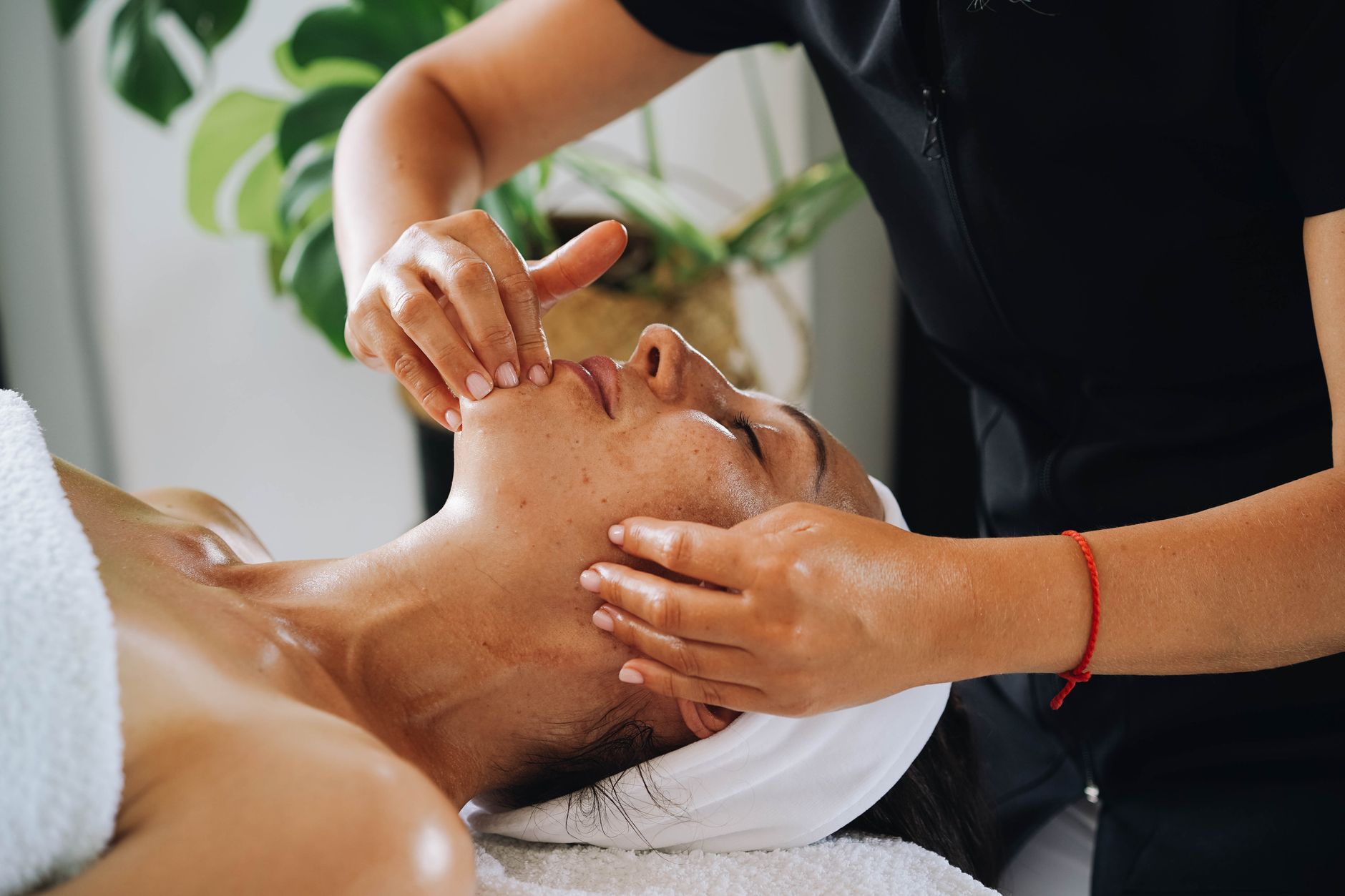
Intraoral massage, also sold as buccal massage, means a gloved therapist presses on your jaw and cheek muscles from inside your mouth. Online, the promises get bigger: a sculpted face and a lasting lift.
What actually exists is two small trials in people with chronic jaw pain. That's research on a medical problem, not on a cosmetic facial.
What the Two Jaw Pain Trials Found
Both trials came from the same Australian chiropractic group and enrolled adults aged 18 to 50 with long-lasting jaw-muscle pain. In the larger one, 93 people were randomised to intraoral therapy, the same plus education and self-care exercises, or a wait-list. The treated groups had sessions twice a week for five weeks. Both beat no treatment over one year, and the group that also got education and self-care exercises did better than massage alone at one year. The comparison group sat on a wait-list and knew it wasn't being treated, so expectation may explain part of the gap.
The smaller trial put 46 people against a plan of education and self-care exercises. The massage group had slightly lower pain at six weeks, but the authors said the difference wasn't at clinically significant levels. Mouth-opening range didn't differ between groups either. One practitioner, who was also the first author, treated everyone at his own clinic.
Two further details add nuance. In the larger trial, adding education and self-care exercises to the massage did better than massage alone at one year. A secondary analysis of the smaller trial found higher odds of a meaningful pain drop with massage, though the intervals were wide.
So the summary is modest. For chronic jaw-muscle pain, it probably beats doing nothing, and it may not beat free exercises by much. The NIDCR says research suggests manual therapy for the soft tissues and muscles around the joint can help improve function and relieve pain. That page describes manual therapy in general, not work inside the mouth.
Does It Change Your Jawline?
No controlled study has shown that. A University of Technology Sydney commentary says there's no rigorous evidence that buccal massage gives a more contoured look. It calls claims of a lasting lift anecdotal.
The usual explanation is that working a muscle from the inside reshapes the face. No trial has tested that, and the same commentary says face shape depends on more than muscle.
Treat any facial structure massage that promises permanent change with suspicion. Neither trial measured appearance. For the outside-of-the-face version of jawline massage, there's a separate look at gua sha for puffiness and jaw tension.
Who Intraoral Massage Is Really For
The NIDCR says TMDs are twice as common in women than in men, especially in women aged 35 to 44. The trials enrolled adults 18 to 50 with chronic jaw-muscle pain. That's a group with pain, not a group chasing a sharper jaw.
The NIDCR also says experts recommend conservative care first and avoiding treatments that permanently change the joints, teeth or bite. Massage is reversible, so it fits that approach. Many TMDs also resolve on their own, so feeling better after any treatment isn't proof the treatment did it.
Cleveland Clinic advises that jaw pain, clicking or stiffness that doesn't improve should go to a healthcare provider. Ask what they think is driving it before massage becomes the plan. If your jaw tightens on stressful days, this piece on why your body holds onto stress covers that side.
Where the Safety Evidence Runs Out
Cosmetic buccal massage hasn't been shown to be safe. The UTS commentary says it isn't known if it's safe or if there are any risks. It adds that hand hygiene matters when fingers go inside the mouth. The smaller 46-person trial reported no adverse reactions, but only about 23 people received the intraoral technique, for five weeks.
That trial also excluded people with dentures, jaw instability, arthritis, recent cancer and connective-tissue disease. Those were eligibility rules, not a safety guideline. If any of them apply to you, ask a clinician before booking.
Skin tone is the other gap. Post-inflammatory hyperpigmentation is the dark mark that follows irritation or injury. A Canadian systematic review of PIH treatments notes, citing earlier research, that it tends to be more prominent and enduring in darker skin. The review names mechanical trauma as one cause and notes research on darker skin is limited. It didn't study massage, so any link to firm facial pressure is an inference.
If a session includes hard pressure on the outside of your face and your skin marks easily, say so beforehand. Two related reads cover why marks last longer on dark skin and how gua sha behaves on it. Whether lighter pressure lowers the risk hasn't been tested.
Frequently Asked Questions
Does Intraoral Massage Work for TMD?
For chronic jaw-muscle pain, small trials say it can help. One 93-person trial found it beat no treatment over a year. A 46-person trial found only a slight edge over education and self-care exercises. Both came from the same Australian group.
Does Intraoral Massage Hurt?
Discomfort hasn't been measured in the trials. They reported no adverse reactions in small groups, which isn't the same as comfortable. If pressure feels sharp instead of achy, tell the therapist right away.
Can You Do Intraoral Massage on Yourself?
People do, but self-massage hasn't been studied. The trials used trained clinicians treating jaw pain, and the safety of cosmetic buccal massage hasn't been studied either. Hand hygiene matters when fingers go in your mouth. A provider can tell you whether your jaw pain needs more than massage.
This article is for informational purposes only. It is not a substitute for professional medical advice, diagnosis, or treatment. Always consult a qualified healthcare provider before making changes to your health routine.