Thyroid dysfunction is one of the most underdiagnosed causes of hair loss in women, and a normal TSH doesn't rule it out. Here's what to know and what to ask.
Your hair started falling out six months ago, but it wasn't dramatic. No handfuls in the shower or bald spots in the mirror. Just more strands on your pillow, a thinner ponytail, and that nagging feeling something was wrong.
Your doctor ran bloodwork and declared your thyroid 'normal' based on one TSH test. Case closed.
Except your hair keeps thinning. And you're exhausted all the time. Your skin feels like sandpaper no matter how much moisturizer you use.
The weight you gained last year won't budge despite eating less. These aren't separate issues, they're all connected to thyroid dysfunction that a single TSH test missed.
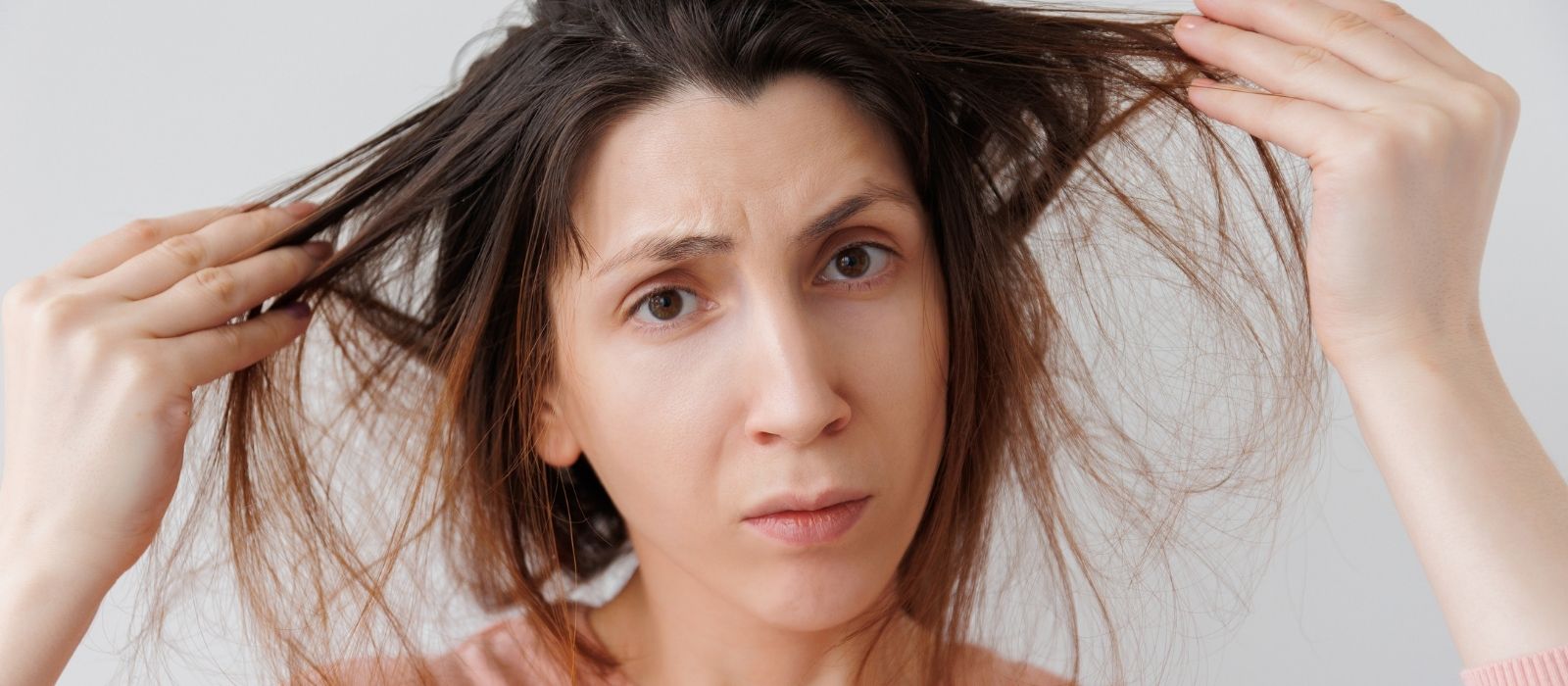
Thyroid hair loss women experience is different from other types of hair loss. It's diffuse, meaning it happens all over your scalp instead of in patches. It starts slowly and gets worse gradually. Most importantly, it often begins before your TSH levels move outside the 'normal' range that most doctors rely on.
What Thyroid Hair Loss Actually Looks Like
Thyroid-related hair loss doesn't follow the pattern you'd expect from genetics or stress. You won't see a receding hairline or circular bald spots. Instead, your hair density decreases uniformly across your entire scalp.
Your part might look wider. Your ponytail feels thinner. You might notice your hairbrush collecting more strands than usual.
The texture changes too. Hair affected by hypothyroidism becomes coarse, dry, and brittle. It breaks more easily and resists moisture no matter what products you use. Some women describe it as feeling like straw or losing its natural softness completely.
Timing matters here. Thyroid hair loss typically begins several months after your thyroid function starts declining. Hair follicles are sensitive to thyroid hormone changes, but they don't react immediately. This delay means your hair could be falling out while your TSH still appears normal.
Why Your TSH Test Isn't Enough
Most doctors test only TSH, thyroid stimulating hormone, and call it comprehensive thyroid screening. TSH measures how hard your pituitary gland is working to stimulate your thyroid, not how well your thyroid is actually functioning. It's like measuring how loudly you're yelling at someone instead of checking if they can hear you.
A complete thyroid panel includes TSH, free T4, free T3, reverse T3, and thyroid antibodies (TPOAb and TgAb). Free T4 and T3 show your actual thyroid hormone levels. Reverse T3 indicates whether your body is converting T4 to the active T3 form properly. Antibodies reveal autoimmune thyroid conditions like Hashimoto's disease.
Here's what happens: your TSH might read 3.2 mIU/L, which falls within the standard range of 0.4-4.0. Your doctor says you're fine. But functional medicine practitioners consider anything above 2.5 worth investigating, especially with symptoms present. Women with TSH levels in the upper normal range often experience hypothyroidism symptoms including hair loss.
The Connection Between Hypothyroidism and Hair Growth
Thyroid hormones directly control your hair growth cycle. T3 and T4 regulate how long hair stays in the growth phase versus the resting phase. When thyroid function drops, more follicles shift into the resting phase simultaneously. This creates the diffuse thinning pattern characteristic of thyroid hair loss women experience.
Low thyroid function also reduces protein synthesis throughout your body. Since hair is primarily protein, insufficient thyroid hormones mean weaker hair structure and increased breakage. Your follicles produce thinner, more fragile strands that don't survive normal styling and environmental stress.
Iron deficiency often accompanies hypothyroidism, creating a double hit for hair health. Low thyroid function reduces stomach acid production, which impairs iron absorption. Iron deficiency alone causes hair loss, so the combination accelerates thinning significantly.
Getting the Right Treatment
Thyroid hair loss treatment starts with proper hormone replacement, but adding biotin supplements won't fix the underlying issue. Most doctors prescribe synthetic T4 (levothyroxine), but some patients need T3 supplementation or natural desiccated thyroid to see hair regrowth.
Hair regrowth takes time. Even with optimal thyroid treatment, expect several months before seeing new growth and six to twelve months for significant density improvement. During treatment, focus on gentle hair care practices and avoid aggressive styling that could worsen breakage.
Address nutrient deficiencies simultaneously. Iron, selenium, zinc, and vitamin D all support both thyroid function and hair growth. Work with a practitioner who understands the connection between thyroid health and hair loss rather than treating them as separate issues.
FAQ
Can thyroid hair loss be reversed completely?
Yes, but only with proper thyroid hormone optimization. Hair regrowth typically begins several months after achieving stable, optimal thyroid levels and can take up to eighteen months to reach maximum improvement.
Why is my hair still falling out even though my doctor says my thyroid is normal?
A normal TSH doesn't rule out thyroid dysfunction. Request a complete panel including free T4, free T3, reverse T3, and thyroid antibodies. Many women have thyroid-related hair loss with TSH levels in the upper normal range.
What's the difference between thyroid hair loss and other types of hair loss?
Thyroid hair loss causes diffuse thinning across the entire scalp, not patches or specific patterns. It typically affects hair texture too, making strands coarse, dry, and brittle throughout the length.
This article is for informational purposes only. It is not a substitute for professional medical advice, diagnosis, or treatment. Always consult a qualified healthcare provider before making changes to your health routine.