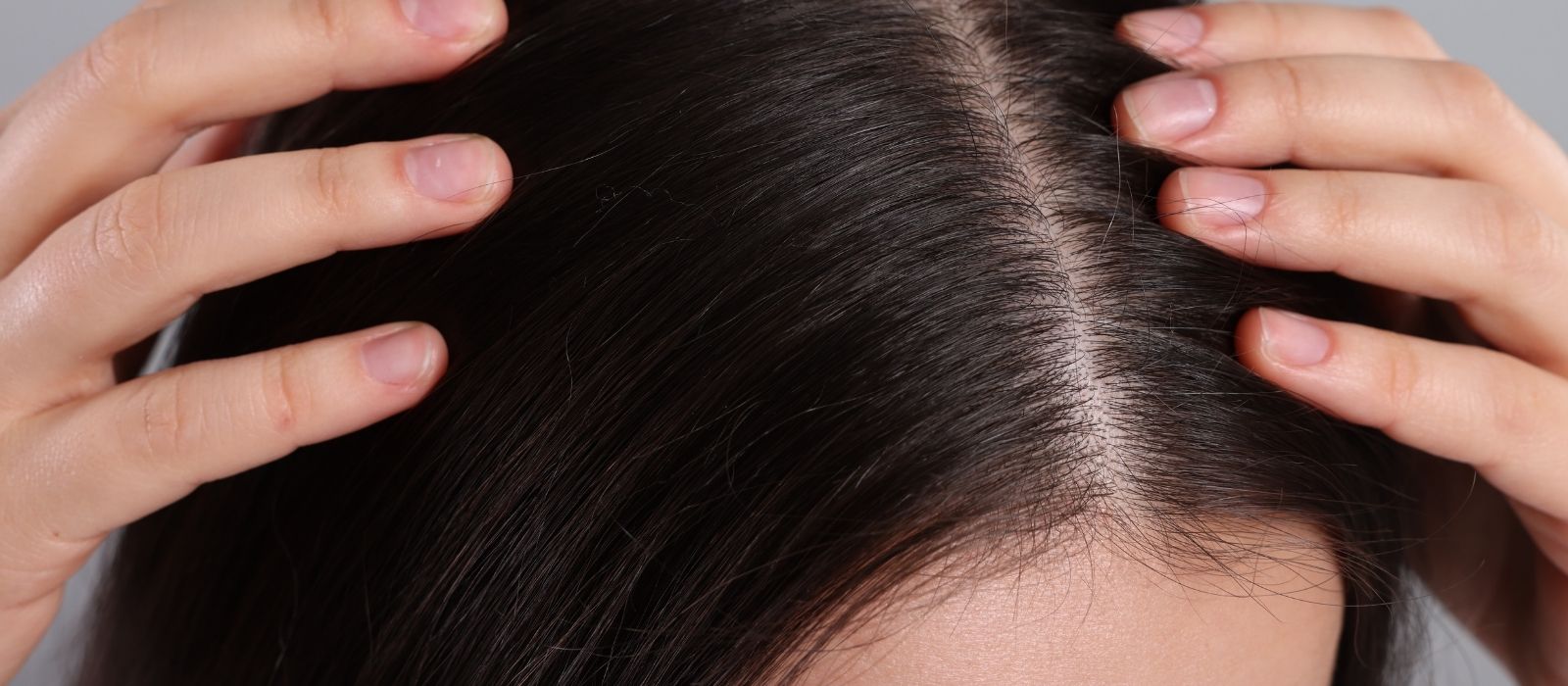
Discover what causes scalp buildup on natural hair and how to fix it. Learn the difference between buildup and dry scalp, plus proven removal methods.
Your scalp feels tight. There's white, waxy residue at your roots that won't brush away. You've used the same curl cream for months, and now your hair feels coated and limp. That's product buildup.
Buildup is what's left when shampoo, conditioner, styling products and hard water minerals collect on your scalp and hair faster than you wash them off. Natural hair is prone to it because coils hold onto product, and because richer products and longer gaps between washes are common. A coated strand is harder to moisturize, so your hair can feel dry with plenty of product on it.
What causes scalp buildup on natural hair usually comes down to heavy styling products, long gaps between washes and hard water. When your hair feels dry and brittle, it's tempting to add more moisture, but the problem may be what's already there.
What Actually Causes Scalp Buildup
Heavy creams and butters are the usual offenders. Shea butter, thick leave-ins and gels are made to stay on the hair, and when you layer them wash day after wash day without cleansing well, they collect on the scalp and around the roots.
Long gaps between washes let all of that pile up. The American Academy of Dermatology suggests washing Black hair about once a week or every other week, partly to limit buildup from styling products.
Some gentle, low-lather cleansers aren't strong enough to shift heavy product on their own. Gentle washing is fine most weeks, but you'll probably need something stronger now and then.
Hard water adds a mineral layer. Calcium and magnesium react with soap to leave a film, and in a lab study on hair from 70 men, strands soaked repeatedly in very hard water became measurably weaker than strands treated with purified water.
How to Tell If You Have Buildup vs Other Scalp Issues
Buildup feels different from dry scalp or dandruff. Your hair feels coated even when wet, products sit on top instead of sinking in, and styles that used to work stop holding.
Dry scalp flakes are small and white. Dandruff flakes are larger and often greasy. Buildup is waxy or sticky, and the white residue clumps at the roots.
Run your fingers through your roots after washing. If there's still a film, or your hair doesn't feel clean, that's buildup. If your scalp is also red, sore or very itchy, it may be something else, so see a doctor if it doesn't clear.
How to Remove Scalp Buildup Safely
A clarifying shampoo is the simplest fix. Look for one with sulfates if your hair tolerates them, or a strong sulfate-free cleanser such as sodium C14-16 olefin sulfonate. Work it into your scalp rather than your lengths, as the AAD advises for any shampoo, and follow with conditioner on the full length.
Every 2 to 4 weeks is a reasonable starting point. If your hair feels stripped afterwards, clarify less often.
An apple cider vinegar rinse is a popular home method for mineral buildup, though there's little research on it. If you try it, mix one part vinegar with three parts water, apply it to your scalp, leave it for a few minutes, then shampoo. Stop if it stings.
Bentonite clay masks are another way people lift residue. Mix about 2 tablespoons of clay with enough water to make a paste and apply it to damp roots.
Leave it for 15 to 20 minutes, rinse thoroughly and follow with conditioner. Don't let it dry hard, because it's then difficult to rinse out.
Preventing Future Buildup
Use heavy creams and oils sparingly, and not on every wash day. Keep hair oiling methods focused on mid-lengths and ends rather than your scalp.
If you have hard water, a shower filter or water softener cuts down the minerals reaching your hair. Your water supplier's annual quality report shows how hard your water is, and the USGS classes water above 120 mg/L, about 7 grains per gallon, as hard.
Pay attention to scalp health signals. Itching, flaking or bumps under the buildup are a sign to wash more often or switch to lighter products.
FAQ
How often should I clarify natural hair?
Every 2 to 4 weeks, depending on how many heavy products you use. If you use few styling products, once a month is usually enough. Heavy product users might need to clarify more often.
Can I use regular shampoo to remove buildup?
A regular shampoo with sulfates often works. Clarifying shampoos are made for stubborn residue, and very gentle sulfate-free cleansers may not shift heavy buildup on their own.
Why does my hair feel dry after removing buildup?
The coating made your hair feel softer than it really was. Once it's gone, follow with a good conditioner and use lighter products from then on.
This article is for informational purposes only. It is not a substitute for professional medical advice, diagnosis, or treatment. Always consult a qualified healthcare provider before making changes to your health routine.