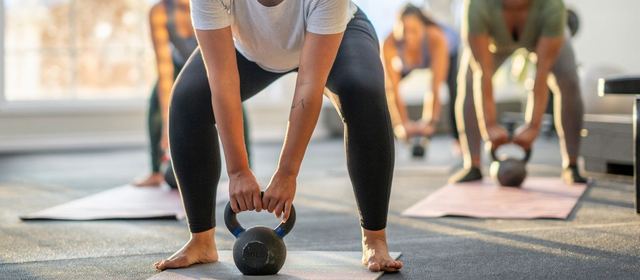
Mobility vs stretching: the injury research favors loaded, controlled movement over stretching alone. Here's what to train and how often.
This article is for women 25 to 45 who train recreationally. You've probably held the same hamstring stretch after workouts for years without knowing if it protects you. In the mobility vs stretching debate, the injury research favors loaded, controlled movement over stretching alone. In trials, that meant strength and balance programs, not anything sold as "mobility."
No study has pitted mobility work against stretching. The best evidence compares stretching with strength and neuromuscular training, so this article keeps those labels straight. That way you know what's been tested and what's a reasonable guess.
What Mobility and Stretching Each Actually Do
Stretching lengthens muscle and the tissue around it, usually by holding a position.
Mobility is a fitness-industry word, not a clinical one, so definitions shift from trainer to trainer. In practice, mobility training means moving through a joint's full range while the muscles work, often with light weight. A slow, deep squat holding a small dumbbell at your chest is one version.
Stretching does what it says. Mayo Clinic notes that stretching can improve flexibility and the range of motion of your joints. The trouble starts when more range gets sold as fewer injuries.
Does Stretching Prevent Injury? Not in the Trials
Mostly no, at least not in any way researchers have been able to measure. A 2004 review found not enough evidence that stretching before or after exercise prevents injury in recreational or competitive athletes. It pooled only six studies and is old, so it's a shrug, not a verdict.
A larger analysis came later. It pooled 25 randomized trials of different exercise programs, with 26,610 people in all. Within it, the stretching trials found no reduction in sports injuries. Every other prevention method it tested leaned favorable.
Mayo Clinic agrees on one point: stretching won't prevent an overuse injury. But the same page says better flexibility may lower injury risk and admits the studies are mixed. That disagreement is real, and the trials haven't settled it.
One Mayo point is worth acting on. Flexibility that isn't equal on both sides may be a risk factor for injury. A much tighter left hip than right is worth working on. It's a warning sign, not proof that evening it out prevents anything.
What Injury Prevention Exercises Actually Work
In the same analysis, strength training cut sports injuries to under a third, and exercise programs as a group nearly halved overuse injuries. The authors call the strength result a tendency, and the trials mixed ages and sexes. Treat it as a direction, not a promise.
Strength, Balance and Landing Drills
Neuromuscular training combines strength, balance, jumping and agility work. The 11 trials covered about 12,700 female team-sport athletes aged 12 to 25. In them, it lowered knee injury risk by about a fifth and ACL injury risk by about half. Most of those trials had a high risk of bias in how injuries were counted.
A separate analysis of teenage team athletes, mostly girls, found 35% fewer total injuries with multicomponent programs. The certainty of that evidence was low.
Dose, Coaching and Who Was Studied
It only worked when people did it. In a meta-analysis of female team-sport athletes aged 12 to 25, injury reduction depended on completing at least 75% of sessions. Sessions longer than 15 minutes, two to three times a week, showed benefit, but other frequencies couldn't be compared.
Coaching mattered too. The authors of one review suspect supervision and feedback on technique ran through every effective program. Two studies with isolated drills and little feedback showed no injury reduction.
Then there's who got studied. Nearly all of this is teenagers and young adults on organized teams. One pooled analysis found no clear ACL benefit in women over about 20. That reflects thin data, not proof of failure. For women 25 to 45, the benefit is unproven either way.
How to Do Mobility Training Without Wasting Time
Skip stretching cold muscles. Mayo Clinic's alternative is a dynamic warm-up, meaning low-level versions of the movements you're about to do. Here's a routine that follows the evidence as far as it goes:
- Before training, spend a few minutes on easy versions of your workout's movements, then build up gradually.
- Do strength work through a range you can control, two to three times a week for over 15 minutes. That dose comes from athlete trials. If you're new, how to start strength training as a woman covers the first weeks.
- Finish most of your sessions. Missing more than a quarter of them erased the benefit in those trials.
- Add weight gradually, using progressive overload for women as a guide.
- Stop if a movement causes sharp or joint pain. See a doctor or physical therapist if pain, swelling or instability lasts more than a few days.
- Get technique feedback from a coach or physical therapist, especially early on.
- Keep stretching if it helps your range or evens out a tight side. Just don't count it as protection.
A few stretches carry risk. If you have osteoporosis, Mayo Clinic says to avoid the knee-to-chest stretch because it may raise the risk of compression fractures in the spine. With an existing muscle strain or other injury, check with a doctor or physical therapist before stretching or loading it.
Here's the catch. Nobody has randomized women 25 to 45 to mobility work or stretching and counted injuries. So this article's advice is a reasoned bet from nearby evidence. If you want the longer-term case for lifting, why strength training matters more in your 30s and 40s goes further.
Frequently Asked Questions
Is Mobility or Stretching Better for Injury Prevention?
Strength and balance training has better evidence than stretching. In a 25-trial analysis of exercise programs, the stretching trials showed no injury benefit, while strength and balance programs did. Mobility drills that load the muscles through a full range are closest to the second group.
Should I Do Mobility Work Before or After a Workout?
Before, make it a dynamic warm-up, since Mayo Clinic warns against stretching cold muscles. Held stretches afterward are fine for range of motion. The 2004 review found not enough evidence that stretching before or after exercise prevents injury.
Are Mobility Stretches Safe for Women With Osteoporosis?
Some aren't. Mayo Clinic says to avoid the knee-to-chest stretch if you have osteoporosis. Ask your doctor or a physical therapist which positions and loaded movements are safe for your bone density.
This article is for informational purposes only. It is not a substitute for professional medical advice, diagnosis, or treatment. Always consult a qualified healthcare provider before making changes to your health routine.