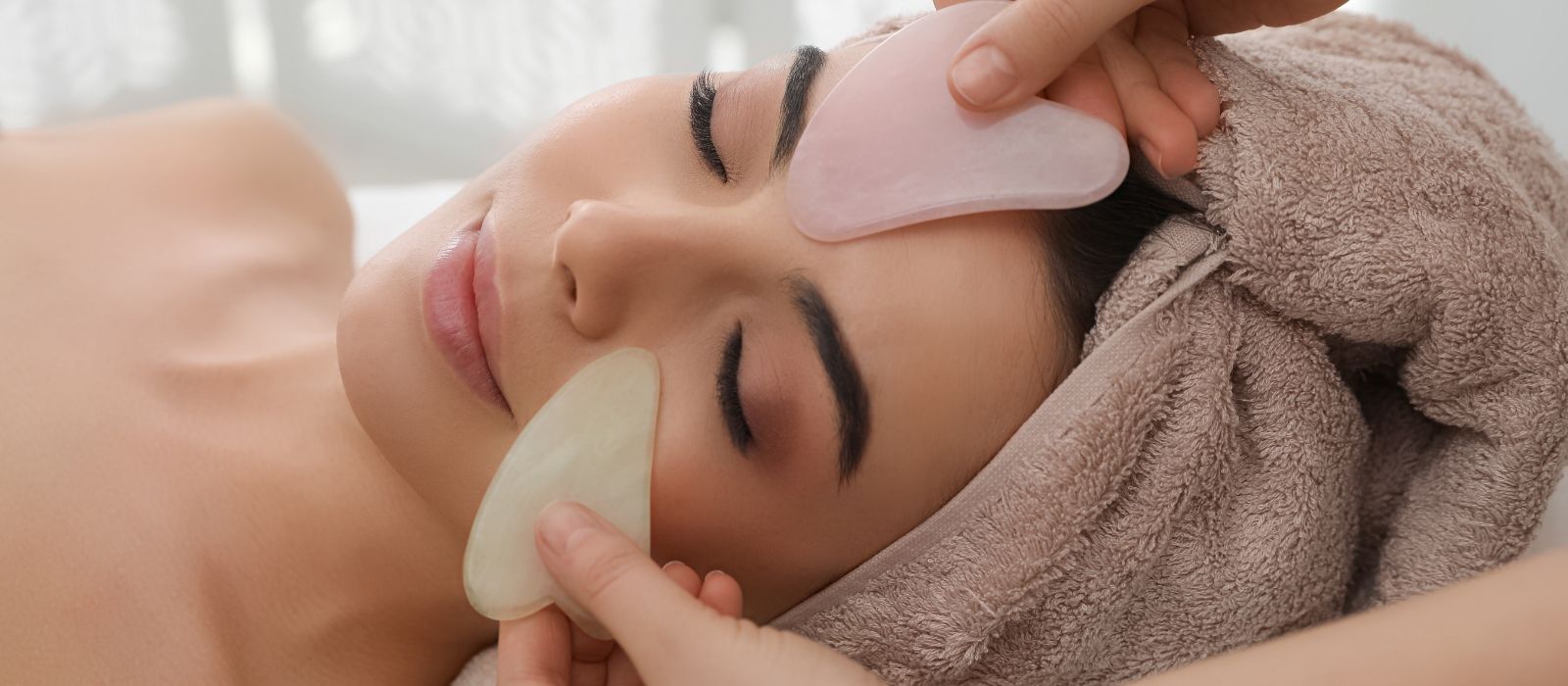
Rose quartz, jade, stainless steel — every gua sha tool promises different benefits. Here's what actually matters for lymphatic drainage and which stones are just marketing.
You're standing in Sephora staring at a wall of gua sha tools. Rose quartz promises to "open your heart chakra." Jade claims to "balance your energy." Stainless steel boasts "superior lymphatic drainage." The prices range from $12 to $89 for what's essentially the same curved piece of material.
The truth? The stone material makes almost no difference for the actual benefits you're after. What matters is the shape, your technique, and whether you use it consistently. The rest is marketing designed to justify premium pricing on ancient wellness trends.
Gua sha works through mechanical pressure and movement, not mystical stone properties. When you scrape the tool across your skin, you're stimulating lymphatic drainage, increasing blood flow, and releasing tension in facial muscles. A $15 stainless steel tool does this just as effectively as an $85 rose quartz one.
What Actually Affects Gua Sha Results
The shape and edges determine everything. You want smooth, rounded edges that won't catch or drag on skin. The tool needs multiple curves — a long edge for broad areas like your forehead and cheeks, plus smaller curves for detailed work around your eyes and nose. Sharp angles or rough edges will irritate your skin and make the experience uncomfortable.
Thickness matters more than material. Tools that are too thin feel flimsy and don't provide enough pressure for effective lymphatic drainage. Too thick and they become clunky, making it hard to work around the delicate eye area. The sweet spot is about 6-8mm thick.
Size affects how much ground you can cover. Oversized tools look impressive but become unwieldy when you're trying to use gua sha on your face correctly. You want something that fits comfortably in your palm and allows precise control around different facial contours.
The Real Difference Between Stone Types
Temperature retention is the only functional difference between materials. Jade and rose quartz stay cool longer than stainless steel, which some people find more soothing. Stainless steel heats up quickly from skin contact but also cools down fast when you set it aside.
Hygiene varies significantly. Stainless steel is non-porous and easiest to sanitize completely. Natural stones like jade and rose quartz have microscopic pores that can harbor bacteria if not cleaned properly. You can sterilize steel with alcohol or boiling water. Stones require gentler cleaning with soap and warm water.
Durability favors metal and certain stones. Stainless steel won't chip, crack, or break if dropped. Jade is relatively durable but can chip. Rose quartz is softer and more prone to damage. If you travel frequently or have a tendency to drop things, steel wins.
Which Materials to Skip Entirely
Avoid plastic tools marketed as "budget-friendly" alternatives. They don't provide the right weight or pressure for effective gua sha for puffiness and jaw tension. The surface often feels sticky or catches on skin, making smooth gliding motions impossible.
Glass tools break too easily and don't offer any advantages over stone or metal. The marketing around "crystal healing" is particularly aggressive with glass, but there's no evidence that material composition affects skin benefits.
Wooden tools absorb oils and are impossible to sanitize properly. They'll harbor bacteria and develop an unpleasant smell over time, especially if you use facial oils during your routine.
What to Look for When Shopping
Weight should feel substantial but not heavy. The tool needs enough mass to provide pressure without you having to press hard. Too light and you'll overcompensate by pressing harder, which can irritate skin.
Surface finish must be completely smooth. Run your finger along all edges and surfaces. Any rough spots, pits, or irregularities will catch on your skin. Natural stones sometimes have inclusions or rough patches that weren't properly polished.
Edges need to be properly rounded. Sharp edges can cause micro-tears in delicate facial skin, especially if you're dealing with gua sha on dark skin what to know regarding increased sensitivity to irritation.
The bottom line: buy based on shape and quality, not material. A well-made stainless steel tool from a reputable brand will outperform a poorly crafted rose quartz tool every time. Focus your budget on getting the right technique down and using it consistently rather than chasing premium materials.
Frequently Asked Questions
Does rose quartz actually do anything different than jade for gua sha
No. Both stones provide the same mechanical benefits for lymphatic drainage and muscle tension. Rose quartz stays slightly cooler than jade, but the difference is minimal and doesn't affect results. The choice comes down to personal preference and price.
Can you use a gua sha tool that's chipped or cracked
Never use a damaged tool on your face. Chips and cracks create sharp edges that can cut or irritate skin. Even small imperfections can cause micro-tears that lead to irritation or scarring. Replace damaged tools immediately.
How often should you replace a gua sha tool
Quality tools last years with proper care. Stainless steel tools last indefinitely unless severely damaged. Natural stone tools should be replaced if they develop chips, cracks, or persistent staining that cleaning can't remove. Replace immediately if the surface becomes rough or pitted.
This article is for informational purposes only. It is not a substitute for professional medical advice, diagnosis, or treatment. Always consult a qualified healthcare provider before making changes to your health routine.