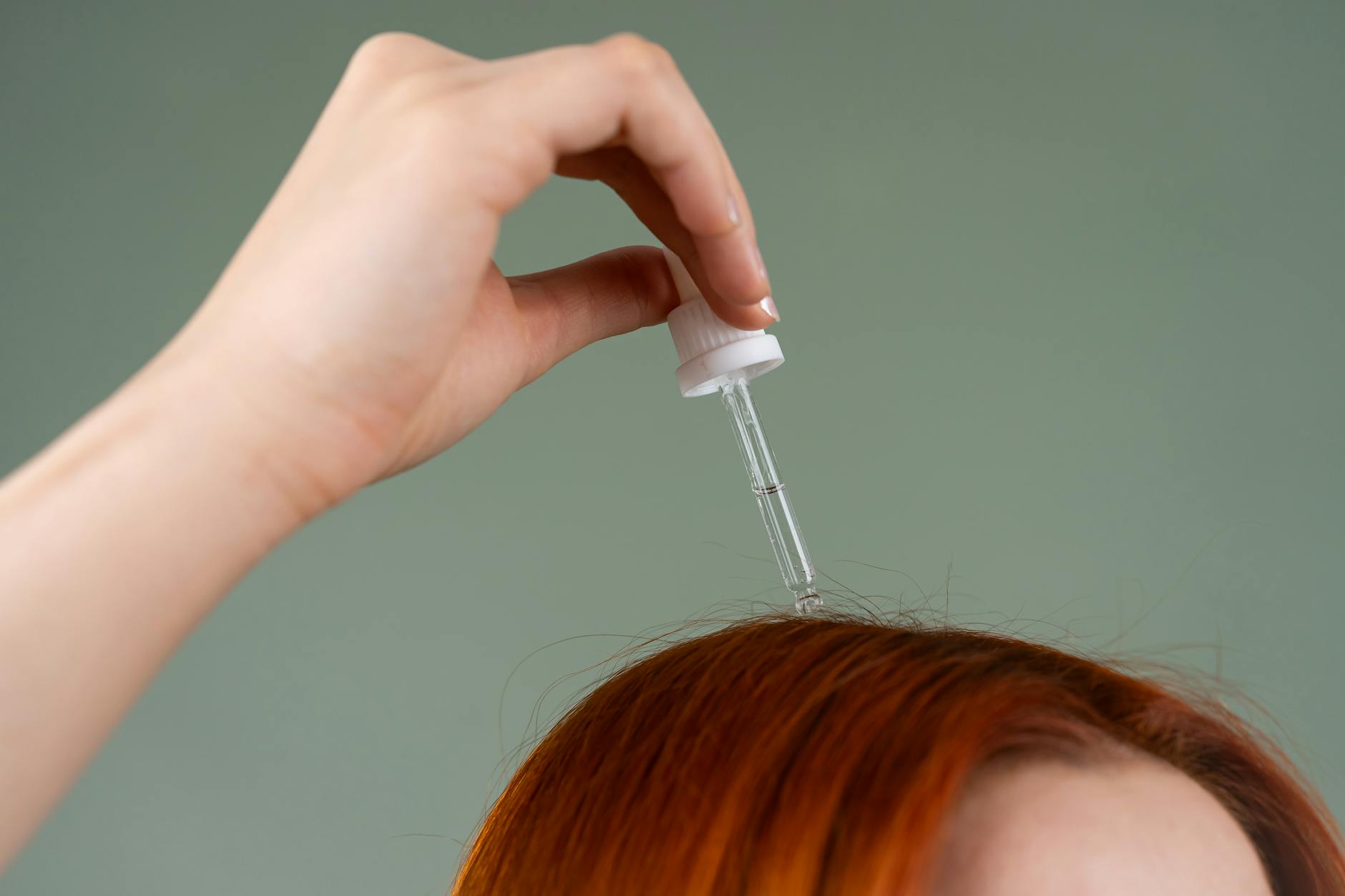
PRP therapy for hair loss costs thousands and requires multiple sessions. Here's what it actually does and whether it's worth the investment.
There's usually a supplement involved. Or a topical. Something she started after the shedding got noticeable, because waiting for a dermatology appointment felt like doing nothing, and doing nothing felt worse.
The supplement is still on the counter. The topical is still in the routine. And she's now researching PRP because neither of those quite got there.
That's the point where platelet-rich plasma hair treatment tends to enter the conversation. It sounds like a real solution: your own blood, concentrated, injected into the scalp. The concept is credible.
The price, once she starts looking, is less easy to absorb. And what tends to be missing from the clinic's landing page is an honest accounting of what the treatment actually costs, how many times she'll need it, and what the research says about who it works for.
Here's that accounting.
What Platelet-Rich Plasma Actually Does to a Follicle
PRP starts with a blood draw, usually 20 to 60ml depending on the provider. That blood goes into a centrifuge, which separates it into layers. The platelet-rich plasma is drawn off and injected directly into the scalp, typically at roughly half-centimetre intervals across the thinning area.
Platelets carry growth factors, including PDGF, VEGF, and IGF-1. When concentrated plasma is introduced to the scalp, those growth factors are thought to stimulate cell proliferation around the follicle, extend the anagen (active growth) phase, and promote new blood vessel formation. The theory is that follicles which have miniaturised but haven't died completely can be coaxed back into producing thicker, longer strands.
What it doesn't do is create new follicles. If a follicle is gone, PRP can't bring it back. That distinction matters a lot when it comes to understanding who responds and who doesn't. The American Academy of Dermatology notes that PRP is most useful as a treatment for androgenetic alopecia, the pattern hair thinning driven by DHT sensitivity, and that results vary significantly by individual.
The research base is real but limited. A 2019 meta-analysis in Dermatologic Surgery reviewed 11 randomised controlled trials and found that PRP increased hair count and hair thickness in patients with androgenetic alopecia compared to placebo. Most studies ran 12 to 24 weeks and used three to four sessions.
What's less established is how long results last without continued treatment, and whether the same protocol works across all hair types and severities. Most of the trial populations were small, and many didn't include women with textured hair. If you've been shedding because of cortisol-driven hair loss rather than androgenetic thinning, the evidence base for PRP is thinner still.
What the Real PRP Hair Loss Cost Looks Like
A single session in Canada typically runs between $500 and $800. In the US, prices range from $400 to $1,500 depending on the city, the provider, and how the session is structured. Those numbers on their own aren't what makes PRP expensive. The loading protocol is.
Standard practice for initial treatment is three sessions spaced four to six weeks apart. That brings the starting investment to $1,500 on the low end in Canada, closer to $2,500 to $4,500 in major US cities. Some clinics recommend a fourth session before moving to maintenance. Most providers then suggest one maintenance session every three to six months to hold the results.
That's the part that gets left out of the headline price. The first round of sessions is the entry cost. The maintenance is the ongoing cost, indefinitely, because PRP doesn't fix the underlying cause of the thinning.
If the follicle miniaturisation is driven by DHT sensitivity or another hormonal factor, that process continues the moment stimulation stops. Some patients find they can stretch maintenance sessions to once a year. Others find results fade within a few months without repeat treatment.
There's no standardised protocol, which is part of why pricing varies and why comparing clinics is difficult. Centrifuge type, plasma concentration, injection depth, and session interval all differ between providers. A 2021 review in the Journal of Cosmetic Dermatology found that platelet concentration varied by a factor of three to eight across different preparation systems, which likely explains some of the inconsistency in reported results. Cleveland Clinic recommends asking providers specifically about their preparation method and concentration protocol before committing.
Who Responds Best and Who Probably Won't
The clearest predictor of response is how much of the follicle is still viable. Someone in the early stages of androgenetic alopecia, with visible thinning but not bald patches, tends to see the most measurable improvement. The follicles are miniaturised but present. They have something to respond to.
Someone with long-established hair loss, or with complete absence of follicular activity in an area, is unlikely to see significant regrowth. PRP cannot restore what isn't there. That sounds obvious, but it doesn't always get communicated clearly at the consultation stage, when a lot of the discussion is still in aspirational territory.
Women with androgenetic alopecia appear to respond similarly to men in the available studies, though the research on women specifically is thinner. Hormonal causes of shedding, including thyroid dysfunction, postpartum effluvium, and iron-deficiency related loss, are less well-studied in relation to PRP. Hormonal hair loss in women often resolves partially on its own once the underlying trigger is addressed, which complicates reading PRP results in that population. If the shedding resolves at the same time as treatment, it's genuinely hard to know what did the work.
Smoking, certain medications, and platelet disorders can affect how PRP performs. Patients on blood thinners or anti-inflammatory drugs are typically asked to pause them before treatment. Any provider who doesn't take a medication and health history before proceeding is worth questioning.
For women thinking about whether to pair PRP with other approaches, saw palmetto's effect on DHT is one of the more evidence-backed topical and oral adjuncts, and some practitioners do combine the two. The scalp environment also matters more than most people account for. Scalp microbiome health affects follicle environment independently of whatever treatment is layered on top, and chronic inflammation at the follicle level can blunt the response to growth factors.
The Honest Assessment
PRP has better evidence behind it than most things sold for hair loss. That bar is low, but the distinction matters. A meta-analysis with randomised controlled trials is not the same as a before-and-after on a clinic's Instagram page.
What the evidence shows is modest to moderate improvement in hair density and thickness for people with early-stage androgenetic alopecia, with results that require maintenance to sustain. It doesn't show consistent regrowth across all patterns, all hair types, or all causes of loss. The studies that exist are mostly small, mostly short, and mostly not in women with hormonal or textured-hair-specific presentations.
The cost is real and ongoing. Three sessions at $600 each is $1,800 to start. Add two maintenance sessions a year at the same price, and year two costs $1,200 on top of that.
Over three years, a conservative estimate is $5,000 or more. That's not an argument against doing it, but it's a number worth holding alongside the clinical picture before a first appointment.
The question that probably matters most before committing isn't whether PRP works. It's whether the pattern and stage of loss she has is the type the evidence is actually about. That's a question worth asking the dermatologist directly, with a preference for a trichologist or derm who specialises in hair, not a general aesthetics clinic. Johns Hopkins Medicine recommends a thorough scalp evaluation, including dermoscopy, before any procedural hair loss treatment to confirm the diagnosis and rule out inflammatory causes that need different management.
What the research hasn't settled yet is which patients will maintain results long-term without ongoing sessions, whether fewer sessions with a higher-quality preparation can match the standard protocol, and how PRP interacts with hormonal changes during perimenopause. Those are open questions, not arguments against the treatment, but they're worth knowing are still open.
Frequently Asked Questions
How Many PRP Sessions Do You Need for Hair Loss?
Most protocols start with three sessions spaced four to six weeks apart, sometimes four. After the initial phase, the standard recommendation is one maintenance session every three to six months. There's no universal protocol, so ask your provider specifically how they structure their loading and maintenance phases before committing.
Does PRP Actually Work for Female Hair Loss?
The evidence is strongest for early-stage androgenetic alopecia. Women with that pattern do appear in the research and show similar response rates to men. For other causes of hair loss, including postpartum shedding, thyroid-related loss, or iron deficiency, the evidence base is much thinner. Identifying the cause of loss before starting treatment matters more than most clinics emphasise.
What Is the Average Price of PRP Hair Treatment?
A single session typically costs $500 to $800 in Canada and $400 to $1,500 in the US, depending on the provider and city. A full initial course of three to four sessions runs $1,500 to $4,500 or more. Ongoing maintenance adds $1,000 to $2,000 or more per year for most people who want to hold their results.
This article is for informational purposes only. It is not a substitute for professional medical advice, diagnosis, or treatment. Always consult a qualified healthcare provider before making changes to your health routine.