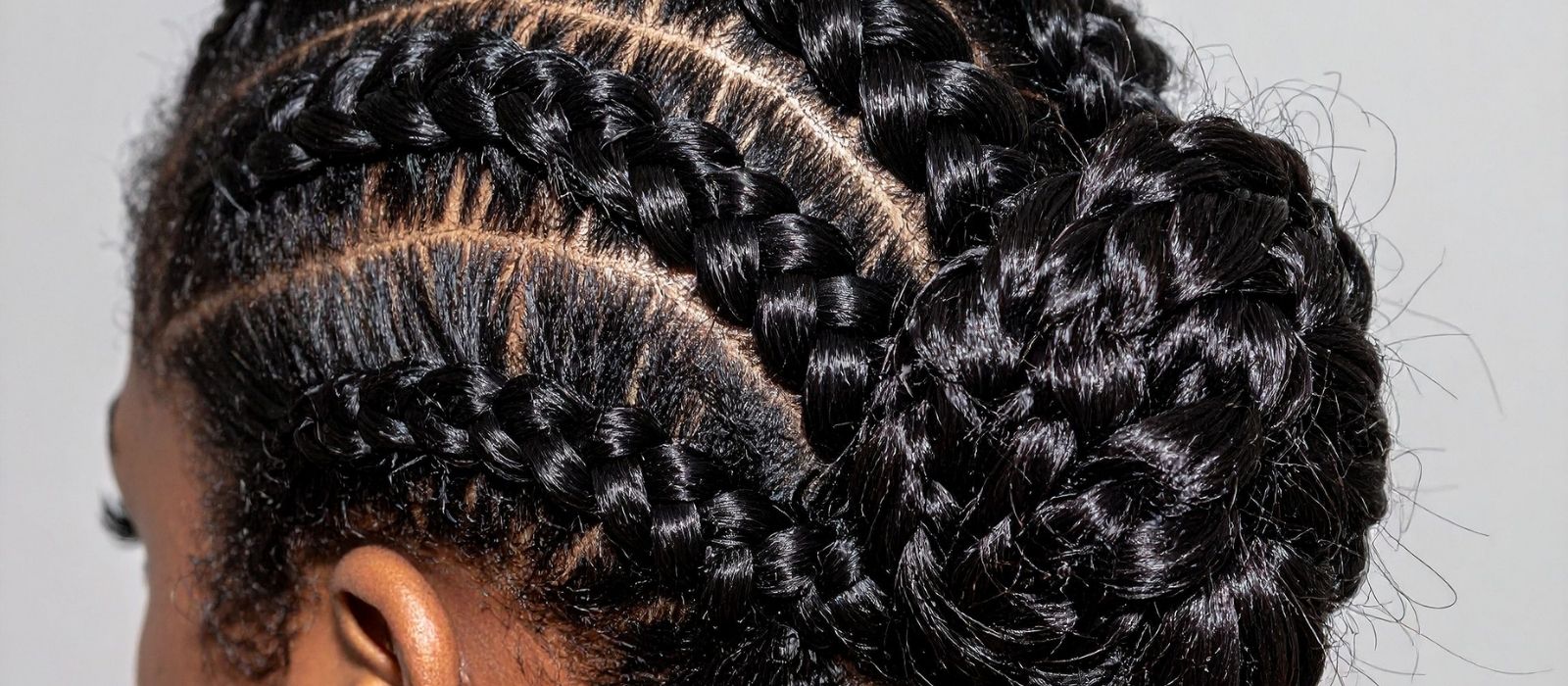
Skip the myths. These protective styles actually protect your hair and promote growth without causing damage or thinning edges.
You installed box braids six weeks ago to grow your hair. When you took them out, your edges looked thinner and your ends felt drier than before. Sound familiar?
The problem isn't protective styling itself, it's that most styles marketed as "protective" actually damage hair through excessive tension, poor installation, or keeping hair in the same position too long. Real protective styles reduce manipulation while maintaining moisture and circulation to your scalp.
The best protective styles for hair growth that actually work share three qualities: they don't pull at your hairline, they allow you to moisturize your scalp regularly, and they can be adjusted or removed without cutting hair. Styles that check all these boxes consistently produce length retention and healthier hair.
What Makes a Protective Style Actually Protective
Protective styles work by minimizing daily manipulation, the combing, brushing, and styling that causes mechanical damage and breakage. Your hair grows approximately half an inch per month regardless of what you do, but retention depends on preventing that new growth from breaking off.
Tension is the biggest destroyer of hair growth in protective styles. Braids pulled tight enough to give you a headache, weaves sewn too close to the scalp, or buns wrapped so tight your eyes water all damage hair follicles and weaken strands at the root. This leads to traction alopecia, permanent hair loss from repeated pulling.
The second factor is access to your scalp. Styles that completely seal off your scalp for months create buildup, reduce circulation, and make it impossible to maintain moisture levels. Your scalp needs regular cleansing and oiling to stay healthy, and healthy scalps grow stronger hair.
Low-Tension Styles That Actually Work
Loose braids are the most reliable protective style for consistent growth. Three-strand braids installed with minimal tension, refreshed weekly with oil, and taken down every 6-8 weeks consistently show the best results for length retention. The key word is loose, you should be able to slide your finger under each braid at the root.
Bantu knots work particularly well for shorter hair that won't stay in braids. Each section is twisted and coiled into itself, distributing tension evenly without pulling at one specific point. They can be worn for 3-4 weeks, unraveled for styling variety, then re-twisted without damage.
Low buns and loose ponytails protect ends while allowing daily scalp access. Use soft scrunchies instead of elastic bands, change the position daily to avoid stress points, and sleep with a silk scarf to prevent friction. These styles work best for hair that's shoulder-length or longer.
Styles That Look Protective But Aren't
Tight cornrows, especially those pulled into high ponytails, cause more damage than daily styling. The tension required to make cornrows look "neat" often exceeds what hair follicles can handle long-term. If your scalp feels sore after installation, the style is too tight.
Box braids longer than your natural hair length create weight that pulls constantly at roots. Extensions should add minimal additional length to prevent stress on follicles. Heavy braids also make it difficult to sleep comfortably, leading to more manipulation as you adjust them nightly.
Weaves sewn directly to tightly braided cornrows create a double layer of tension. The base braids pull at your scalp, then the weft attachment adds weight and restricts access for cleaning. Scalp health directly impacts hair growth, making sealed-off weaves counterproductive for length goals.
Making Any Style Work Better
Pre-installation matters more than the style itself. Deep condition 24 hours before installation, trim any split ends, and apply a light oil to your scalp. Well-moisturized hair handles styling stress better and shows less breakage during removal.
Maintenance frequency depends on your hair's porosity and the style's tension level. High porosity hair needs moisture every 3-4 days, while low porosity hair can go a week between treatments. Apply diluted leave-in conditioner to your scalp using an applicator bottle, focusing on areas that feel tight or dry.
Sleep protection extends any protective style's effectiveness. Silk or satin pillowcases reduce friction, but a wrapped scarf works better because it stays in place. Replace elastic bands weekly, they weaken over time and create snag points that break hair.
The removal process determines whether you retain your growth. Set aside 2-3 hours, work in small sections, and use plenty of slip from conditioner or oil. Cut tangled sections rather than forcing combs through knots. Proper oiling techniques make removal easier and reduce breakage.
FAQ
How long should I keep protective styles in for maximum hair growth?
Six to eight weeks maximum for braided styles, three to four weeks for twisted styles. Longer periods increase buildup and make removal more damaging. Your hair grows continuously, but retention depends on preventing breakage during takedown.
Why are my edges thinning even with protective styles?
Edge thinning usually means too much tension at the hairline or using the same parting pattern repeatedly. Try styles that don't incorporate your edges, alternate parting directions, and focus on edge-specific treatments to prevent further damage.
Can I wash my hair while wearing protective styles?
Yes, and you should. Dilute shampoo with water in an applicator bottle, focus on your scalp rather than the hair itself, and rinse thoroughly. Clean scalp equals better growth conditions. Skip this step and you'll see buildup that weakens hair at the roots.
This article is for informational purposes only. It is not a substitute for professional medical advice, diagnosis, or treatment. Always consult a qualified healthcare provider before making changes to your health routine.