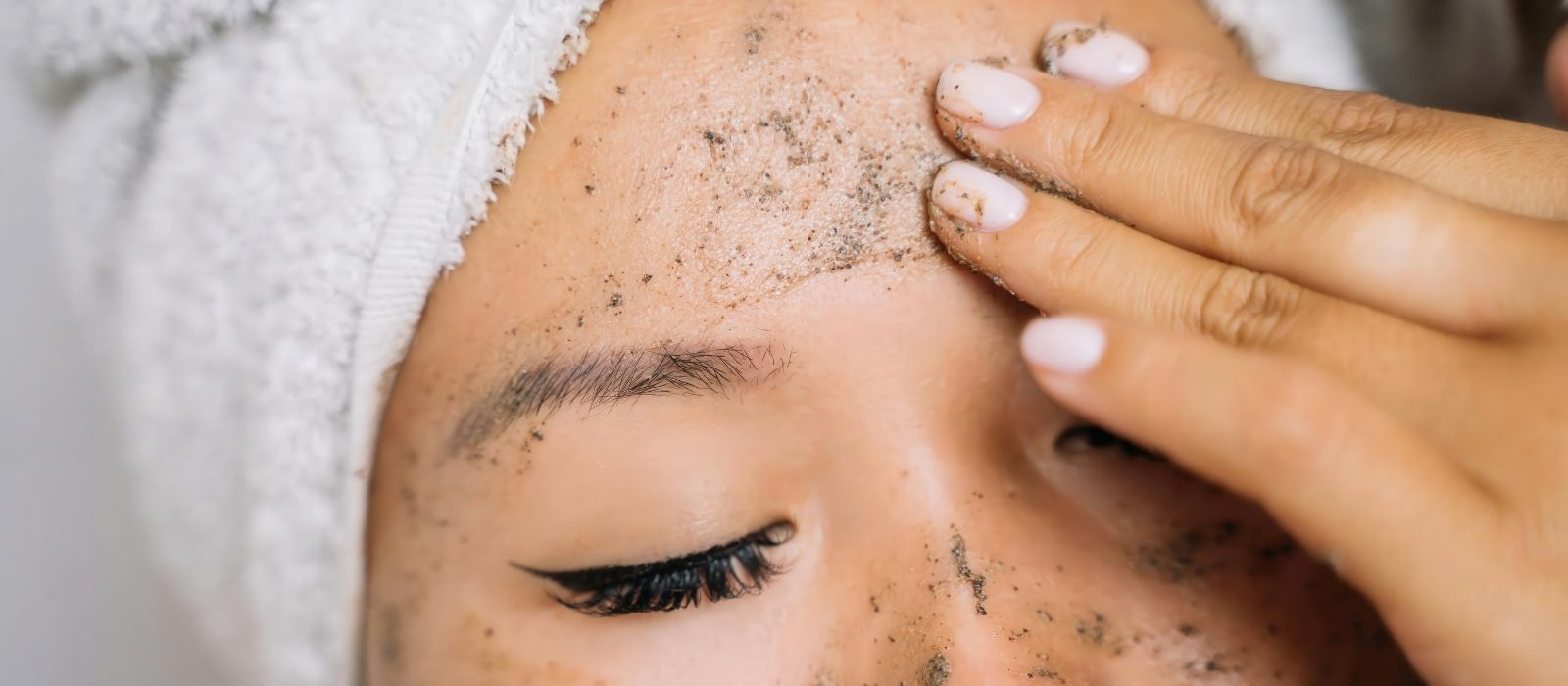
Over-exfoliating damages your skin barrier and causes inflammation, even when your skin looks temporarily smoother. Here's why it happens and how to stop.
Your skin feels baby-smooth after that glycolic acid mask, and the texture looks great the next morning. So you reach for the salicylic acid cleanser, follow it with retinol, and finish with the grainy scrub you love. Three days later your face is red, tight and breaking out worse than before.
That's how over-exfoliating wrecks your skin. The smoothness shows up right away, while the damage builds quietly underneath, so it feels like you're on the right track until suddenly you aren't. Healthy skin shouldn't need daily exfoliation to look good.
Exfoliation removes dead cells from the surface to reveal fresher skin. But those surface cells are there for a reason. They protect the living layers below from irritants and water loss, and if you strip them too often, you expose skin that isn't ready for it.
Your Skin Barrier Isn't Optional
Your barrier is made of flattened dead cells held together by lipids. Picture a brick wall: the cells are bricks, the lipids are mortar. It keeps irritants out and water in, and over-exfoliating takes a sledgehammer to it.
Each type of product works on that wall differently. Acids like AHAs and BHAs loosen the bonds between cells, scrubs scrape them away, and retinoids speed up turnover. Use more than one of these regularly and you're hitting the barrier from several sides at once.
A damaged barrier lets more water escape. That's why over-exfoliated skin feels tight and looks dull, however much you're doing to make it glow.
The Inflammation Trap
Once the barrier is broken, products that never bothered you start to sting, and the skin stays red and reactive. That ongoing irritation is the trap.
Irritated skin also breaks out more easily. The American Academy of Dermatology warns that scrubbing can make acne flare and that any time you irritate your skin, you risk more breakouts. So the problems you're trying to fix with harsh exfoliation can get worse when you damage your skin barrier.
Signs You're Over-Exfoliating
Your skin tells you when it's had enough, though the signals aren't always obvious. Tightness after cleansing is the first one, because healthy skin shouldn't feel like it's shrinking. Stinging from products that used to be fine is another.
New breakouts can be a sign too, since irritated skin is more prone to acne. Different types of acne need different approaches, and over-exfoliation can bring on inflamed spots even if you normally only get blackheads.
Skin that looks shiny and tight but feels rough or sore is a classic sign. So is redness and flaking that doesn't settle.
Makeup that won't sit right is another clue. Foundation clings to dry patches or slides off areas that used to hold it fine.
How to Fix Over-Exfoliated Skin
Pause the exfoliating products: acid toners, scrubs, cleansing brushes and over-the-counter retinol. If one of them is a prescription retinoid or acne treatment, ask the doctor who prescribed it how to adjust it rather than dropping it on your own.
Switch to the gentlest cleanser you can find, and cream or oil formulas usually beat foaming ones right now. Pat your skin dry instead of rubbing, and put a barrier repair moisturizer on while your skin is still damp.
Look for ceramides, cholesterol, fatty acids and niacinamide, and avoid fragrance, essential oils and drying alcohol for now. Your skin microbiome may be thrown off as well, and it generally settles once the barrier recovers.
Give it a few weeks, longer if your skin was badly damaged. If it's still raw, cracked or painful after that, see a dermatologist.
When you go back to exfoliating, start with once a week and one method, either a gentle BHA or a low-strength AHA, not both. The AAD's guide to exfoliating at home says the stronger the method, the less often you need it, and suggests darker skin tones avoid strong chemical or mechanical exfoliation. Moisturize straight after, and watch how your skin looks over the next few days, not just that evening.
If you use AHAs, wear sunscreen. The FDA reports that after four weeks of AHA use, skin became 18% more sensitive to reddening from UV, and recommends sun protection during use and for a week afterwards.
Healthy skin has natural texture, and sensitive skin types especially do better with less exfoliation and more barrier care.
Frequently Asked Questions
How often should I exfoliate my face?
There's no single right number. The stronger the method, the less often you need it, and dry, sensitive or darker skin usually does best with gentler options used less often. Start with once a week and increase only if your skin stays calm.
Can I use multiple exfoliating products in one routine?
It's better not to. Stacking acids, scrubs and retinoids in one routine is the fastest way to irritate your skin. Use one method at a time and put different types on different days.
How long does it take to repair over-exfoliated skin?
Mild irritation often settles once you stop the cause and keep your routine gentle. A badly damaged barrier takes weeks rather than days. If your skin is still raw, cracked or painful after a few weeks of gentle care, see a dermatologist.
This article is for informational purposes only. It is not a substitute for professional medical advice, diagnosis, or treatment. Always consult a qualified healthcare provider before making changes to your health routine.