Adult acne hits different than teenage breakouts. Here's why you're still getting pimples in your 20s, 30s, and 40s, and what actually works to clear them.
You cleared up in high school and college went fine. Then at 26 your chin erupts like you're fifteen again. Or you sailed through your twenties and woke up at 35 with sore bumps along your jaw that won't quit.
You're far from alone. In a US survey of 1,013 adults, about half of women in their 20s reported acne, along with 35% of women in their 30s and 26% in their 40s. Women were affected more often than men in every age group.
So why are you still getting acne in your 20s, 30s and 40s? Mostly because of hormone shifts across your cycle and later in perimenopause, stress, and what you put on your skin and hair. Adult acne also tends to look different from teenage acne, which is why the treatments that worked at seventeen don't always work now.
Hormones Behind Acne in Your 20s, 30s and 40s
Teenage acne is driven by the rise in androgens at puberty, which ramps up oil production. In adult women it's more about fluctuation: the American Academy of Dermatology lists periods, pregnancy, perimenopause, menopause, and starting or stopping the pill as common triggers.
In your twenties, breakouts often follow your cycle. In a 2014 survey of 105 women with acne, 65% said their acne got worse around their period. Researchers haven't pinned down exactly why.
Your thirties can bring more of the same, plus new triggers. A pregnancy or a change in contraception can set off breakouts, and the progestogen-only pill and contraceptive implant sometimes make acne worse.
In your forties, perimenopause makes hormone levels harder to predict. Estrogen falls unevenly while androgens change less, which is one likely reason adult-onset acne is most common in women going through menopause.
Products, Over-Cleansing and Your Skin Barrier
Adult skin has usually been through years of sun, product experiments and over-cleansing. An irritated barrier makes skin more reactive, and harder to treat, because you can't tolerate the actives that clear acne.
Harsh cleansers, antibiotics and over-exfoliation can also disturb the bacteria that normally live on your skin. Your skin microbiome is part of the acne picture, though researchers are still working out how.
Stress and Adult Acne
Adult stress tends to be ongoing rather than tied to one exam week: deadlines, money, caring for parents, short nights. According to the American Academy of Dermatology, stress prompts the body to make more androgens, which stimulate oil glands and hair follicles, and ongoing stress can keep acne active.
Stress also eats into sleep and makes it hard to stick to a routine. Stress breaks out your skin by more than one route: in a study of 94 teenagers in Singapore, those who felt more stressed had more severe acne, even though the amount of oil their skin made was the same at exam time as in the holidays.
Then the breakouts become one more thing to worry about. That loop gets harder to break as your responsibilities pile up.
What Else Has Changed Since Your Teens
Adult life brings its own triggers. You may wear makeup most days, press a phone to your face, sleep on pillowcases that don't get washed weekly, or rest your chin in your hand at your desk.
You're probably using more products than you did at fifteen, too. Heavy creams, oily hair products and layered routines can clog pores, so look for "non-comedogenic" or "won't clog pores" on labels. Some medicines list acne as a side effect; if you suspect one, talk to the doctor who prescribed it rather than stopping it yourself.
Hormones affect your skin differently at every age, so the routine that worked in your twenties may not suit your thirties or forties.
Why Adult Acne Needs a Different Approach
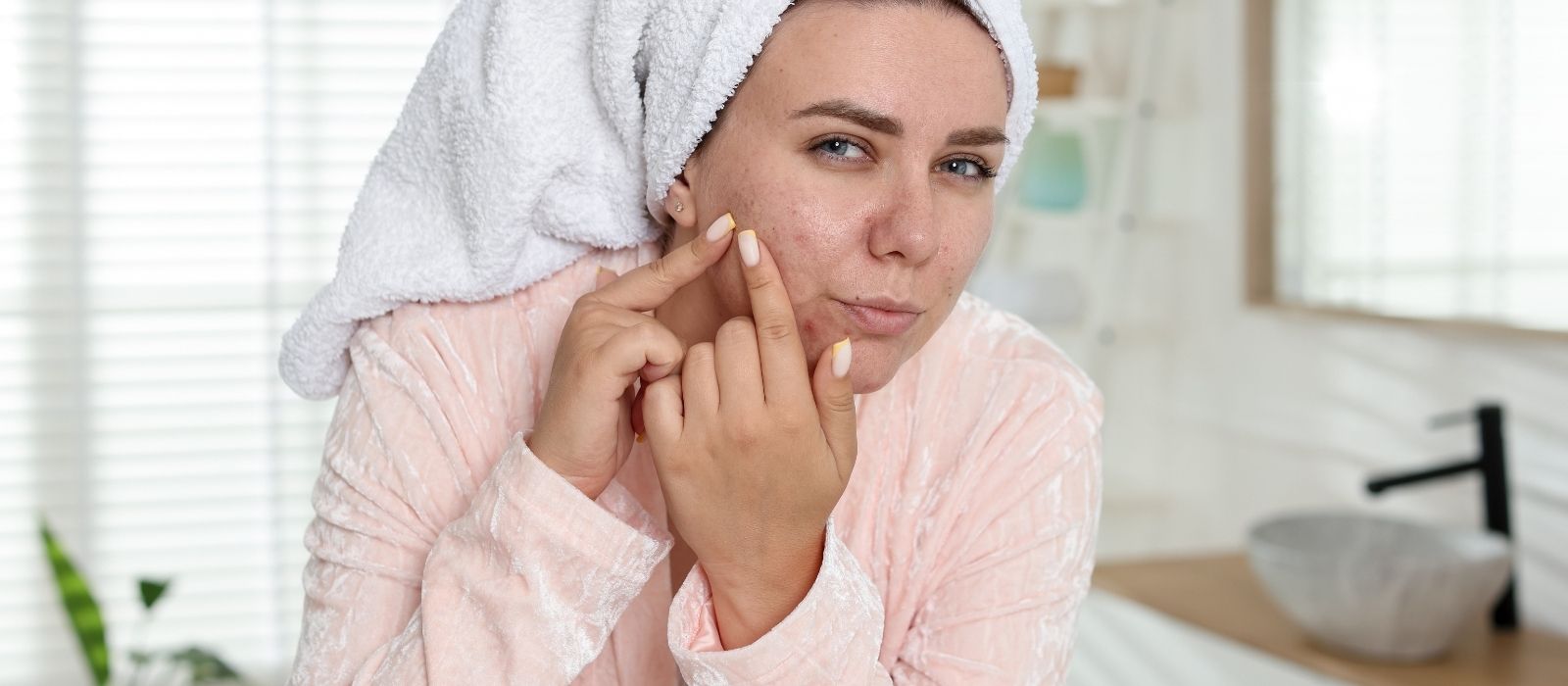
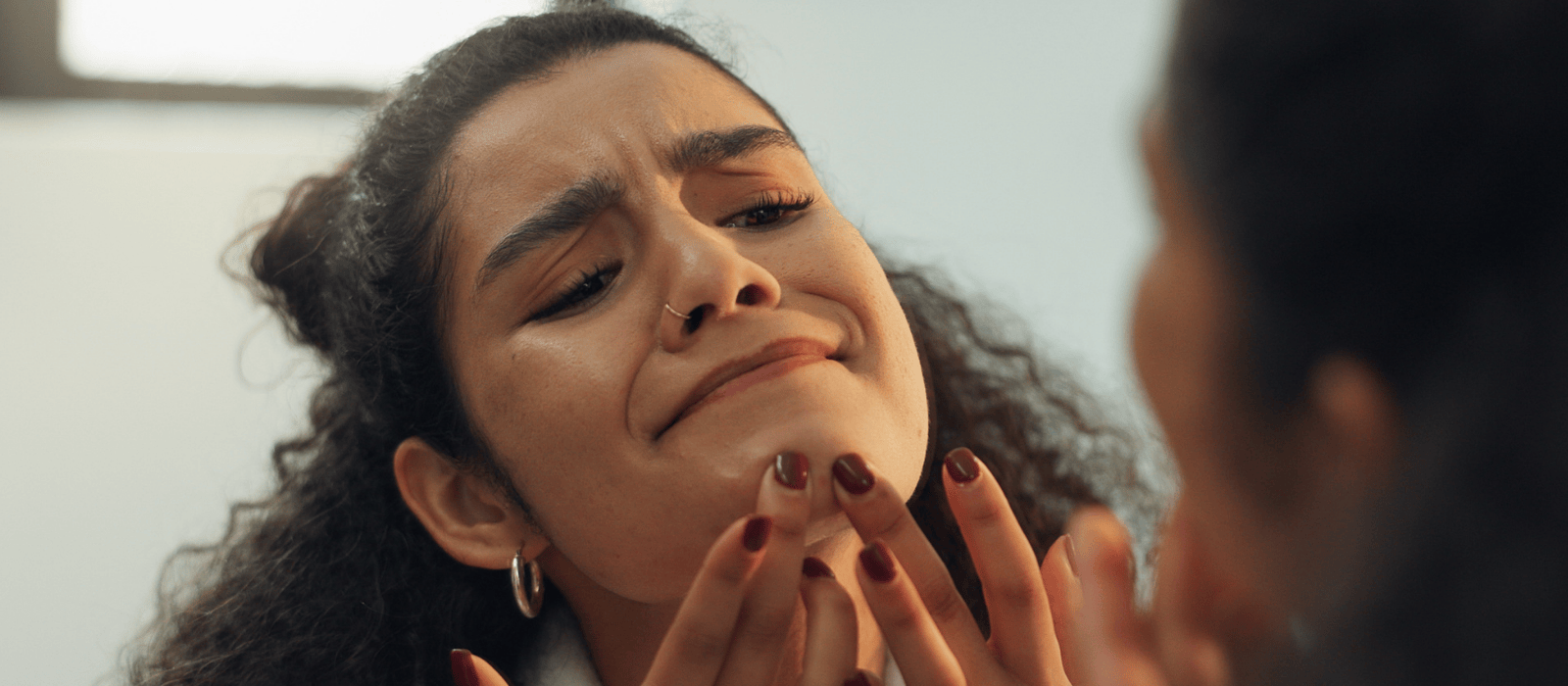
Adult acne in women often looks different from teenage acne. Instead of blackheads and whiteheads across the whole face, you're more likely to get deeper, tender bumps around the chin, jawline and sometimes the neck.
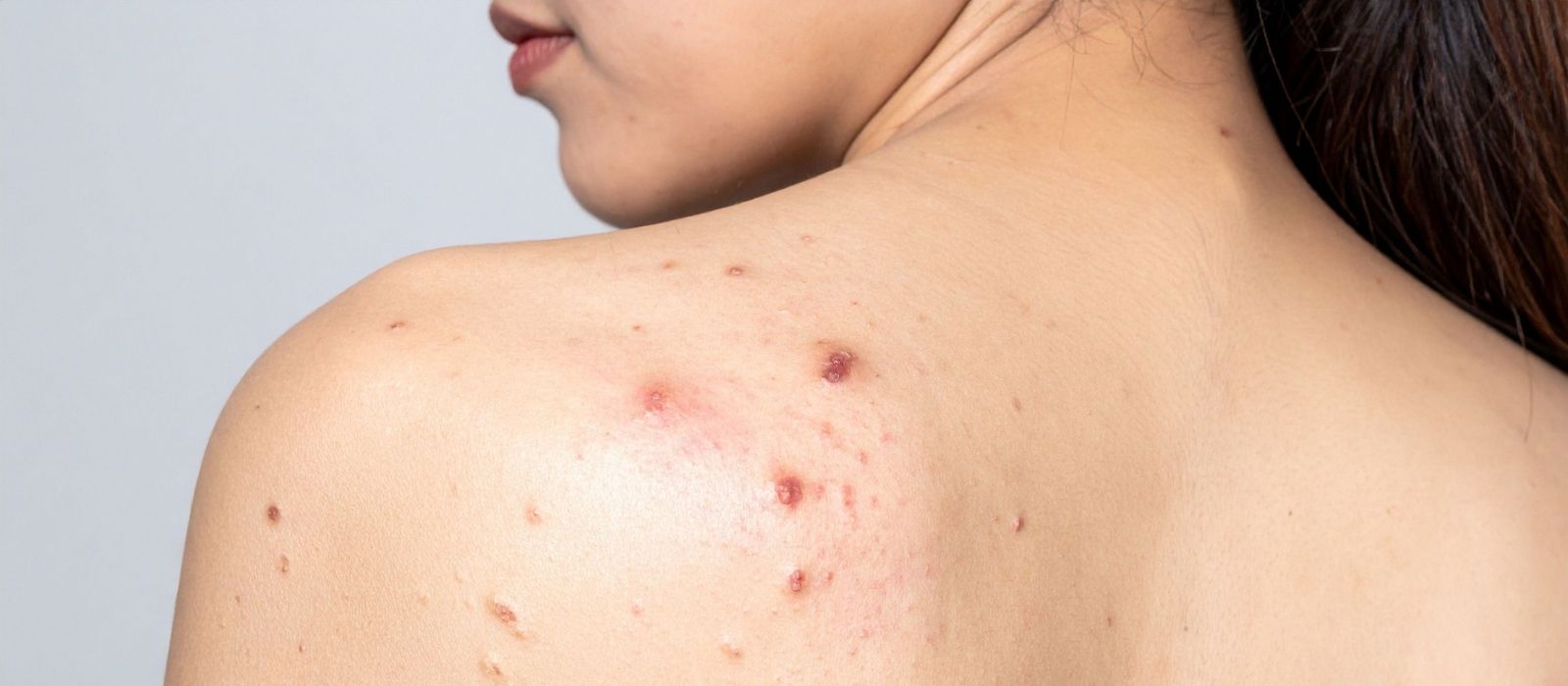
Hormonal acne on your chin and jawline needs different treatment from the forehead breakouts you might have had as a teenager. The same goes for body acne versus face acne.
Where and when your breakouts appear are clues to the cause. If acne keeps coming back despite what you've tried, see a dermatologist. Sudden acne alongside irregular periods or extra hair growth is worth a doctor's visit too, since a hormonal condition such as polycystic ovary syndrome (PCOS) can be behind it.
FAQ
Is it normal to suddenly get acne in your 30s if you never had it before?
Yes. Adult-onset acne is common, and women get it more often than men. Hormone changes, stress, new products and some medicines can all trigger it, whatever your skin was like as a teenager.
Why does my acne get worse right before my period even in my 40s?
Premenstrual flares are common at any age while you still have periods, though researchers haven't pinned down exactly which hormone change causes them. In perimenopause, cycles and hormone levels become less predictable, so the pattern can become less regular too.
Can stress really cause acne breakouts in adults?
Stress can make acne worse. It prompts the body to make more androgens, which act on oil glands, and studies of students have found acne gets worse at exam time. Adult stress tends to be more constant than teenage stress, which can keep breakouts going.
This article is for informational purposes only. It is not a substitute for professional medical advice, diagnosis, or treatment. Always consult a qualified healthcare provider before making changes to your health routine.