At home red light therapy what to know: which devices work, what wavelengths matter, and how to avoid expensive mistakes. Get real results without the salon markup.
A friend swears her LED mask took years off her face. Another credits a handheld wand for calming her breakouts. And you're scrolling past hundreds of devices, from cheap panels to four-figure setups, trying to work out which ones do anything.
Here's the short version. Red light has some real evidence behind it for skin, the effects are modest, and the number that matters most (how much light actually reaches your skin) is the one most brands leave off the box.
How Red Light Therapy Works on Skin
The working theory, called photobiomodulation, is that red and near-infrared light gets absorbed by the mitochondria in skin cells and nudges them to make more energy. That's thought to calm inflammation and encourage collagen. Most of the mechanism comes from lab work, so what counts is what shows up on real faces.
The best-known human trial enrolled 136 volunteers and gave 113 of them red or broadband light, twice a week for 30 sessions, while the other 23 went untreated as a control group. The treated groups had smoother skin, better complexion ratings and higher collagen density on ultrasound. The broader spectrum did no better than red light alone, which is worth remembering when a device advertises seven colours.
Near-infrared reaches a little deeper than visible red, which is why many devices combine the two. Neither will fix hormonal symptoms like poor sleep or low mood, whatever the packaging implies.
What to Look for in At-Home Devices
Look for the irradiance: the power reaching your skin, in milliwatts per square centimetre (mW/cm²), at the distance you'll actually use the device. Studies report it, along with dose and session length. Comparing them is hard, because a review of 31 randomized LED trials found settings varied widely and many studies were small or had no sham control. If a brand won't give you the number at all, you can't compare it with anything.
A headline figure like '200W' tells you what the device draws from the wall, not what lands on any patch of your face. Spread across a big panel held a foot away, the light at your skin can be a small fraction of that.
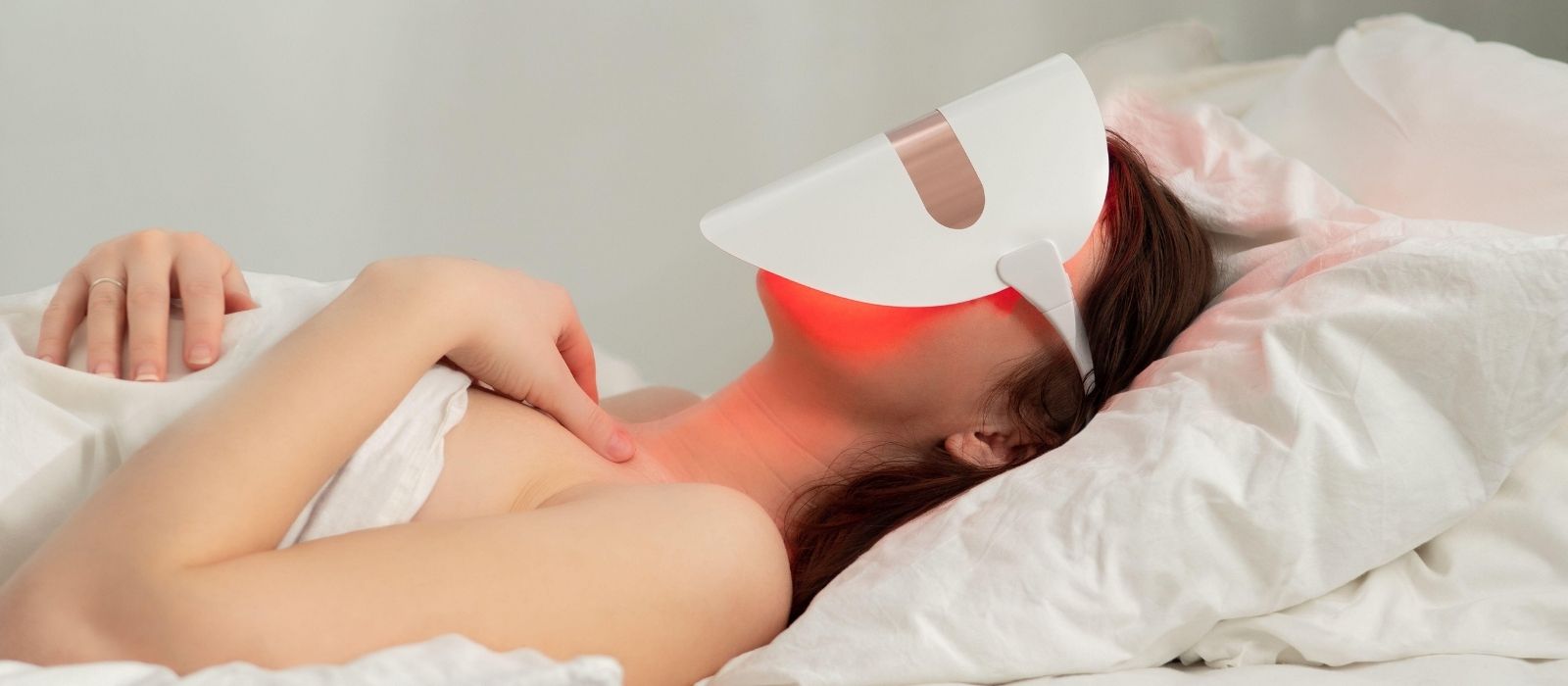
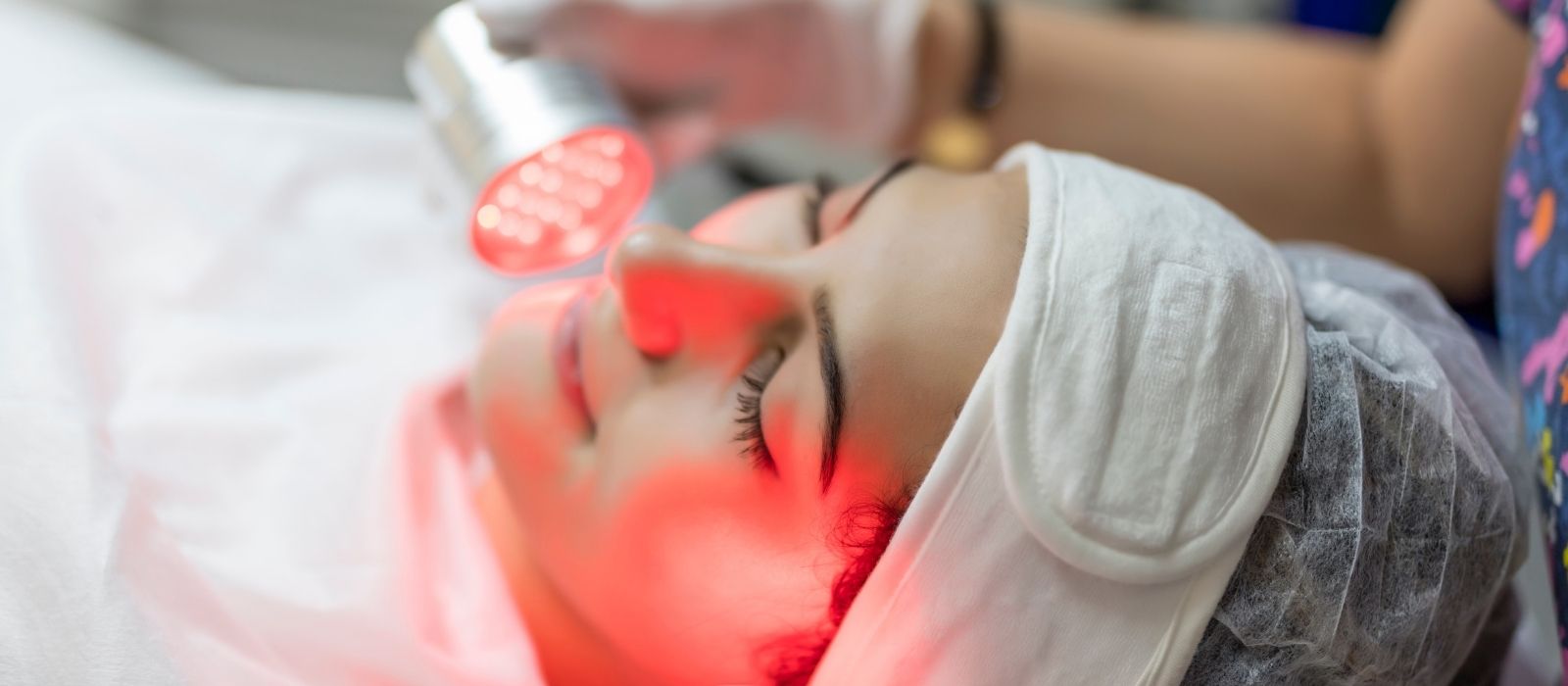
Size decides how often you'll need sessions and how long they take. A handheld wand covers one patch at a time, so a full face means several rounds. Masks treat the whole face at once, and panels cover the most but need space. The American Academy of Dermatology puts most home devices between about $100 and more than $1,000, and notes that the ones in a dermatologist's office are more powerful.
Safety and Realistic Expectations
FDA clearance is about safety, not results. The AAD's advice is to look for clearance on the packaging and to treat 'FDA approved' or 'FDA certified' as misleading wording, since the agency clears these devices rather than approving them.
If the instructions call for eye protection, wear the goggles they recommend every session. Sunglasses aren't a substitute. Check with a dermatologist first if you have lupus or another light-sensitive condition, take a medication that makes you sensitive to light, or have darker skin, which can react to visible light with dark spots that linger.
Give it months, not days. The trial above measured skin after 15 and 30 twice-weekly sessions, and the AAD says plainly that results take time and not everyone gets them. It isn't a one-off treatment either; you have to keep going.
Red light sits alongside other treatments rather than replacing them. It won't settle the hormonal shifts of postpartum recovery, and it's no substitute for medical care for a skin condition.
Frequently Asked Questions
Can you use red light therapy every day?
Follow your device's instructions, because settings vary so much between devices. The main controlled trial used two sessions a week, and there's no good evidence that daily use works better. Stop if your skin gets sore or irritated.
Does red light therapy work for hormonal acne?
It may calm some inflamed spots, but the research on light for acne is thin, and it does nothing about the hormonal imbalances behind the breakouts. If your acne keeps coming back, a dermatologist can offer treatments with much stronger evidence.
How much should I spend on a red light therapy device?
Home devices run from about $100 to well over $1,000, and price alone won't tell you much. Pay for a device that states its irradiance and session time and carries FDA clearance, not for the biggest wattage on the box.
This article is for informational purposes only. It is not a substitute for professional medical advice, diagnosis, or treatment. Always consult a qualified healthcare provider before making changes to your health routine.