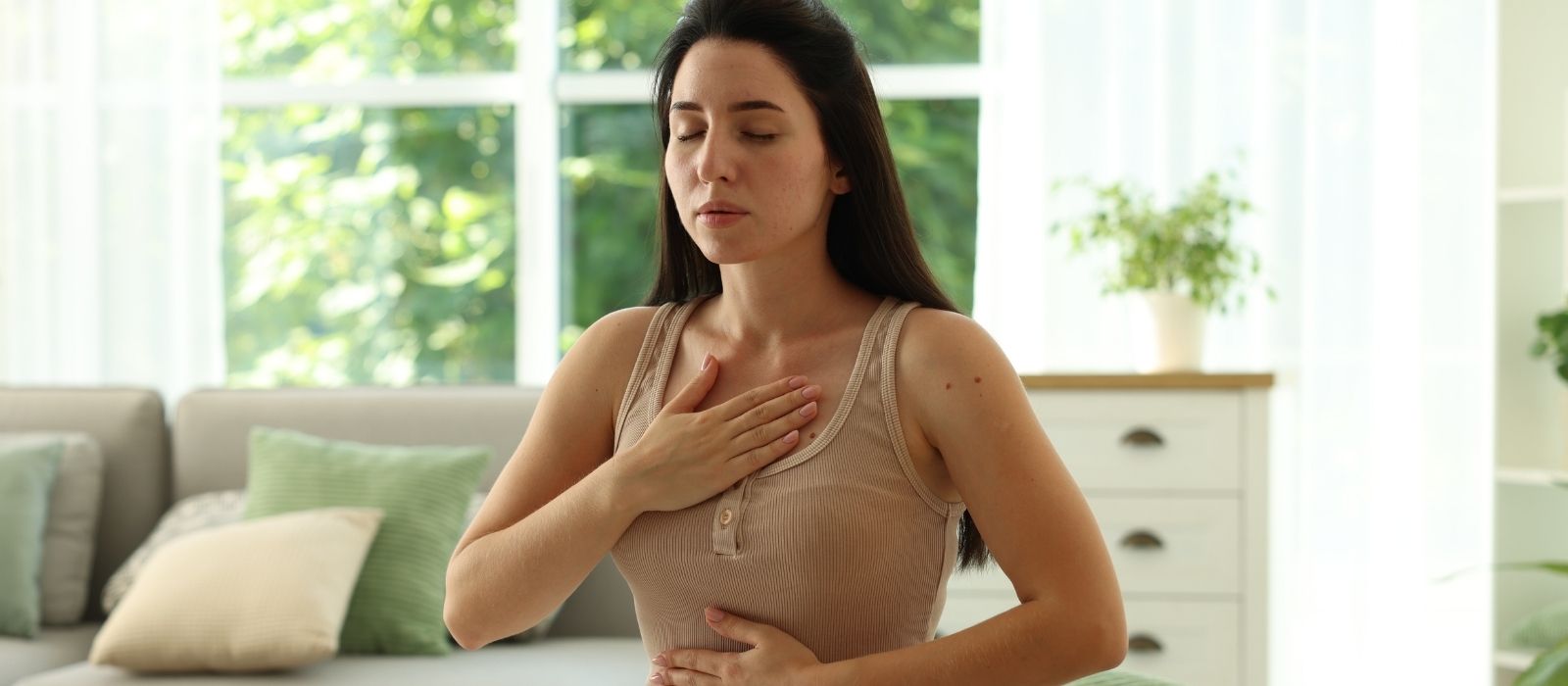
Box breathing calms anxiety in minutes while 4-7-8 breathing puts you to sleep. Learn which breathing technique works for your specific needs and when to use each one.
You're lying in bed at 2am, mind racing, when someone suggests counting your breath. You try the first technique that pops up online, breathe in some pattern for five minutes, and feel exactly the same. The problem isn't that breathing techniques don't work. It's that you picked the wrong one for what you needed.
Box breathing and 4-7-8 breathing get lumped together as 'calming breath work,' but they target completely different states. One stops anxiety spirals in their tracks. The other knocks you out within minutes. Using the sleep technique when you need focus, or the alertness technique when you're trying to wind down, explains why you felt nothing.
Here's what separates them: box breathing regulates your nervous system without making you drowsy, while 4-7-8 breathing actively sedates you by flooding your system with carbon dioxide. Both activate your parasympathetic nervous system, but through different mechanisms that create opposite results.
How Box Breathing Works
Box breathing follows a simple 4-4-4-4 pattern. Inhale for four counts, hold for four, exhale for four, hold empty for four. Repeat that cycle 6-10 times and your heart rate variability improves, your vagus nerve activates, and your stress response downregulates.
Navy SEALs use this technique because it creates calm alertness, not sleepiness. The equal inhale and exhale ratios balance your autonomic nervous system without tipping you toward sedation. Your cortisol drops but your focus stays sharp.
Research from the Cleveland Clinic shows that equal breathing patterns like box breathing reduce anxiety symptoms within 5 minutes by synchronizing your heart rate with your breath rate. This coherence signals safety to your nervous system without triggering the rest-and-digest response that makes you want to nap.
How 4-7-8 Breathing Works
The 4-7-8 pattern works differently. Inhale for 4 counts, hold for 7, exhale for 8. That extended exhale and long hold increase carbon dioxide in your bloodstream, which acts like a natural sedative.
Dr. Andrew Weil, who popularized this technique, calls it a 'natural tranquilizer' because it mimics what happens when you fall asleep naturally. Your exhale gets longer, your heart rate drops significantly, and your body temperature starts to decrease.
The 7-count hold is what makes this technique so potent for sleep. Holding your breath increases CO2 levels, which triggers your body's natural drowsiness response. That's why you feel heavy and relaxed after just 3-4 cycles, unlike box breathing which leaves you calm but alert.
When to Use Box Breathing
Choose box breathing when you need to stay functional but calm down fast. Before presentations, during work stress, after getting bad news, or when your cortisol feels spiked but you can't afford to get sleepy.
Box breathing works particularly well for anxiety that shows up as racing thoughts or physical tension. The predictable pattern gives your mind something concrete to focus on while the balanced breathing ratios reset your nervous system without sedating you.
It's also perfect for building a daily breathwork practice because you can do it anywhere without worrying about timing. Mid-morning anxiety, pre-meeting nerves, or post-argument regulation all respond well to box breathing.
When to Use 4-7-8 Breathing
Save 4-7-8 breathing for when you actually want to fall asleep or enter deep relaxation. Bedtime routines, Sunday evening wind-downs, or recovery days when you need your nervous system to fully downshift.
This technique excels at breaking the cycle of bedtime anxiety or racing thoughts that keep you wired at night. The sedating effect happens fast, which is why sleep-focused breathwork relies on extended exhales rather than balanced patterns.
Don't use 4-7-8 breathing during the day unless you can afford to feel drowsy for the next 30-60 minutes. The CO2 buildup creates genuine sleepiness that doesn't just switch off when you're done breathing.
The Timing That Actually Matters
Box breathing works best in 5-10 minute sessions when you need immediate regulation. You'll feel the shift within 2-3 minutes, and the effects last 1-2 hours.
4-7-8 breathing needs only 4-8 cycles to work. More than that and you might feel lightheaded from the CO2 buildup. The sleepiness kicks in within minutes and can last several hours.
Both techniques get more effective with practice, but 4-7-8 breathing shows results faster for beginners. Box breathing takes a few sessions to feel natural, while 4-7-8's sedating effects work even on your first try.
FAQ
Can you do box breathing and 4-7-8 breathing on the same day?
Yes, but use them for different purposes. Box breathing for daytime stress management and 4-7-8 breathing only when you want to sleep or deeply relax.
Which breathing technique is better for panic attacks?
Box breathing works better for panic attacks because it regulates without sedating. The equal counts are easier to follow when your mind is racing, and you won't feel more disoriented from sudden drowsiness.
How long does it take to see results from breathing techniques?
4-7-8 breathing works within 2-3 cycles for sleepiness. Box breathing reduces anxiety symptoms within 3-5 minutes. Both become more effective after practicing for a week consistently.
This article is for informational purposes only. It is not a substitute for professional medical advice, diagnosis, or treatment. Always consult a qualified healthcare provider before making changes to your health routine.