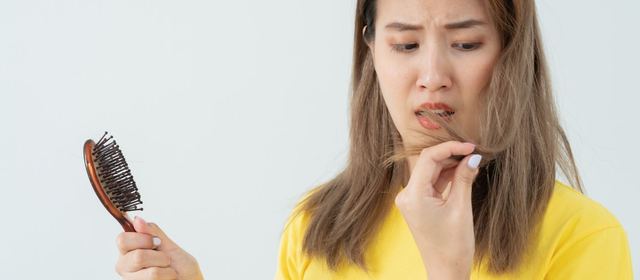
Tirzepatide hair loss was reported in Zepbound trials at nearly 6%. Why women may be more affected, and what to check if Mounjaro is thinning your hair.
Yes, tirzepatide can cause hair loss. In pooled Zepbound clinical trials of over 2,500 adults, hair loss occurred in 4 to 5 percent of people taking tirzepatide, compared to 1 percent on placebo. At the highest dose of 15 mg, the rate reached 5.7 percent in some trial analyses. No one in the tirzepatide group stopped treatment because of it, but if you're watching more hair come out in the shower than you're used to, the numbers say you're not imagining it.
Here's the part that matters most if you're a woman: the Zepbound prescribing label breaks it down by sex. 7.1 percent of women on tirzepatide reported hair loss, compared to just 0.5 percent of men. On placebo, 1.3 percent of women reported it and no men did. That's a real gap, and it tracks with what dermatologists see in practice.
Mounjaro and Zepbound contain the same drug, tirzepatide. Mounjaro is prescribed for type 2 diabetes, Zepbound for weight management. Hair loss is listed on the Zepbound label but not the Mounjaro label, likely because the weight loss in obesity trials is greater and faster, and rapid weight loss is the trigger that pushes hair into shedding.
What the Zepbound Clinical Trials Found
The Zepbound prescribing information pools data from two studies covering 2,519 adults treated for up to 72 weeks. The hair loss rates by dose:
- Placebo: 1 percent
- 5 mg: 5 percent
- 10 mg: 4 percent
- 15 mg: 5 percent
A systematic review published in 2025 that analyzed the SURMOUNT trial program found similar numbers: alopecia in 5.4 percent of treated participants (119 out of 2,183) versus 0.9 percent on placebo (22 out of 2,221). Per-dose rates were 5.1 percent at 5 mg, 4.9 percent at 10 mg, and 5.7 percent at 15 mg. SURMOUNT-3 reported the highest rate at 7 percent versus 1.4 percent on placebo.
What the Mounjaro diabetes trials found is harder to pin down. Hair loss isn't listed as an adverse reaction on the Mounjaro prescribing label. The weight loss in diabetes trials is typically less dramatic than in obesity trials, which likely explains the difference.
Tirzepatide vs Semaglutide: Does One Cause More Hair Loss?
If you've read about Ozempic and hair loss, you might wonder how the two drugs compare. Here's what the trial data shows, keeping in mind these are from separate studies and can't be directly compared:
- Tirzepatide (Zepbound): 4 to 5 percent across doses, with 7.1 percent of women affected
- Semaglutide (Wegovy) at 2.4 mg/week: 3.3 percent overall, with 4 percent of women affected
- Semaglutide (Wegovy) at 7.2 mg/week: 5.8 percent overall, with 8.4 percent of women affected
At the standard approved doses, tirzepatide appears to come with slightly higher shedding rates than semaglutide. The systematic review noted that tirzepatide is most often linked to telogen effluvium, a temporary shedding condition, and connected this to the drug's faster and greater weight loss. Tirzepatide is a dual GIP and GLP-1 receptor agonist, while semaglutide targets only GLP-1. That dual mechanism tends to produce more weight loss, and more weight loss means more metabolic stress on the body, including on hair follicles.
A study published in The BMJ in 2026 using electronic health records from the University of Pennsylvania Health System found that GLP-1 receptor agonists were associated with a 37 percent higher risk of hair loss compared to SGLT-2 inhibitors and a 68 percent higher risk compared to DPP-4 inhibitors in adults with type 2 diabetes. The absolute risk remained low, but the association was specific to non-scarring alopecia. The study was funded by the National Institutes of Health.
Why Rapid Weight Loss Triggers Hair Shedding
Your hair grows in cycles. At any given time, about 80 to 90 percent of your hair follicles are in the anagen (growth) phase, which lasts up to four years. Around 5 percent are in catagen (transition) and another 5 percent are in telogen (resting), according to Cleveland Clinic.
When your body goes through a significant stressor, like rapid weight loss, caloric restriction, or nutritional shifts, it can push a large number of follicles out of the growth phase and into resting at once. This is telogen effluvium. Instead of the normal 50 to 100 hairs shed daily, you might lose up to 300. The shedding usually starts two to three months after the trigger and can last three to six months.
With tirzepatide, the weight loss can be substantial. In the SURMOUNT-1 trial, participants on the 15 mg dose lost an average of about 22 percent of their body weight over 72 weeks. That's a dramatic metabolic shift. The caloric deficit required, combined with potential changes in protein intake, micronutrient absorption, and hormonal balance, creates the conditions for telogen effluvium.
The BMJ study authors suggested that rapid weight loss and resulting iron or zinc deficiencies may trigger the shedding, and that hormonal changes could also play a role. The systematic review added that in some people, telogen effluvium may unmask underlying androgenetic alopecia (pattern hair loss) that was previously not visible.
Why Women May Be More Affected
The sex difference in the Zepbound trials is striking: 7.1 percent of women versus 0.5 percent of men. The systematic review noted that females appeared to be disproportionately affected across GLP-1 studies. In a separate retrospective cohort, semaglutide was associated with higher hair loss risk in women (adjusted hazard ratio of 2.08) but not in men (hazard ratio 0.86).
Several factors may explain this. Women may lose a larger percentage of body weight in these trials. Women are also more likely to have pre-existing iron deficiency, which is independently linked to hair loss. Hormonal fluctuations during weight loss, including shifts in estrogen and bioavailable testosterone, may compound the stress on hair follicles. And there's also reporting bias: women may be more likely to notice and report hair changes than men.
Whatever the reason, the numbers are what they are. If you're a woman on tirzepatide and you're shedding more than usual, the clinical data supports that this is a recognized pattern.
What to Check with Your Doctor
Hair shedding on its own doesn't tell you why it's happening. Before assuming the medication is the sole cause, your prescriber should check for treatable factors that could be making it worse:
- Ferritin (iron stores): Low ferritin is one of the most common correctable causes of hair loss in women. Rapid weight loss and reduced food intake can deplete stores. A ferritin level below 30 ng/mL is associated with telogen effluvium, though some dermatologists prefer to see it above 70.
- Zinc: Zinc deficiency has been linked to hair shedding. Caloric restriction increases the risk.
- Protein intake: When calories drop, protein often drops with them. Hair follicles need amino acids to maintain the growth cycle. If you've cut back on meals, check whether you're hitting your protein target.
- Thyroid function: Both hypothyroidism and hyperthyroidism cause hair loss, and thyroid changes can occur independently of GLP-1 treatment. A TSH test rules this out.
- Vitamin D and B12: Both can drop with dietary changes and are worth checking if your provider is already ordering labs.
If any of these come back low, correcting them may reduce shedding even if you stay on tirzepatide.
Can You Prevent Hair Loss on Mounjaro?
There is no proven way to prevent telogen effluvium from rapid weight loss. No supplement or topical product has been tested in clinical trials specifically for GLP-1-related hair shedding. But there are reasonable steps that address the most likely contributing factors:
- Prioritize protein. Aim for at least 60 to 80 grams per day, or more based on your body weight and activity level. Protein is the first thing to fall when appetite drops on tirzepatide.
- Ask about dose titration. Slower dose increases may mean slower weight loss, which could reduce the metabolic shock that triggers shedding. Your prescriber can adjust the pace.
- Get labs done early. Don't wait until you're losing hair to check iron, zinc, and thyroid levels. Baseline labs before starting treatment give you something to compare against.
- Don't add restrictive diets on top of the medication. Tirzepatide already reduces appetite significantly. Adding calorie counting, intermittent fasting, or carb restriction on top of that can deepen the nutritional deficit.
If shedding does occur and persists beyond six months, or if you notice a widening part or thinning at the crown that looks different from the diffuse shedding of telogen effluvium, ask for a referral to a dermatologist. That pattern could indicate androgenetic alopecia being unmasked rather than straightforward telogen effluvium.
When to Worry vs When It's Temporary
Most tirzepatide-related hair shedding follows the telogen effluvium pattern: diffuse thinning across the scalp, starting a few months after the weight loss ramps up. Cleveland Clinic notes that acute telogen effluvium resolves in about 95 percent of cases, usually within six to twelve months once the trigger stabilizes.
Signs that it may be more than temporary:
- Shedding that continues past 12 months without improvement
- A visible widening part or thinning at the crown (which may suggest pattern hair loss)
- Patches of complete hair loss (which could indicate alopecia areata, a different condition)
- Scalp tenderness, redness, or scarring (which warrants immediate evaluation)
In the Zepbound trials, no participant discontinued treatment because of hair loss. That doesn't mean it wasn't distressing, but it suggests that for most people, the shedding was manageable and expected to resolve. The decision to continue, adjust, or stop treatment is yours and your prescriber's to make together.
If you've been prescribed minoxidil for hair loss while on tirzepatide, know that it treats the symptom, not the cause. It may help maintain follicle activity during the shedding period, but the evidence for using it specifically alongside GLP-1 medications hasn't been studied.
Frequently Asked Questions
Does Mounjaro cause hair loss?
Hair loss is not listed on the Mounjaro prescribing label for type 2 diabetes. However, Zepbound, which contains the same active ingredient tirzepatide and is prescribed for weight loss, reported hair loss in 4 to 5 percent of participants across clinical trials. The difference likely reflects the greater weight loss seen in the obesity trials, since rapid weight loss is a known trigger for telogen effluvium.
Is tirzepatide hair loss worse than semaglutide hair loss?
In separate clinical trials, tirzepatide showed slightly higher rates of hair loss than subcutaneous semaglutide at the standard 2.4 mg/week dose (about 5 percent vs 3.3 percent). However, these come from different trial populations and cannot be directly compared. A systematic review noted that tirzepatide's faster and greater weight loss may explain the higher shedding rate.
Will hair grow back after stopping Mounjaro or Zepbound?
If the shedding is telogen effluvium triggered by rapid weight loss, hair typically regrows within 6 to 12 months once the trigger resolves. Cleveland Clinic notes that telogen effluvium resolves in about 95 percent of acute cases. However, if an underlying condition like iron deficiency or thyroid dysfunction is contributing, that needs to be addressed separately.
Should I stop taking Mounjaro if my hair is falling out?
Do not stop any prescribed medication without talking to your doctor. Hair shedding from weight loss is usually temporary and resolves on its own. Your prescriber can check for nutritional deficiencies and thyroid function, adjust your dose to slow the rate of weight loss, and help you weigh the benefits of continued treatment against the shedding.
Does tirzepatide cause hair loss directly or is it the weight loss?
Current evidence points to rapid weight loss and associated caloric restriction as the most likely cause, not a direct drug effect on hair follicles. A systematic review noted that no human studies have shown tirzepatide acts directly on hair follicles. The pattern matches telogen effluvium, a well-documented response to rapid weight change, nutritional shifts, and metabolic stress.
This article is for informational purposes only. It is not a substitute for professional medical advice, diagnosis, or treatment. Always consult a qualified healthcare provider before making changes to your health routine.